
How to Write an Infusion Set Tender Specification: ISO 8536-4 Checklist
“Sterile disposable infusion set, CE, good quality” is not a usable tender specification. It allows suppliers to quote different drop factors, tubing lengths, vents, filters, connectors and injection ports under one line item. The checklist below helps medical-supply importers turn clinical need into comparable bids, traceable evidence and enforceable acceptance criteria.
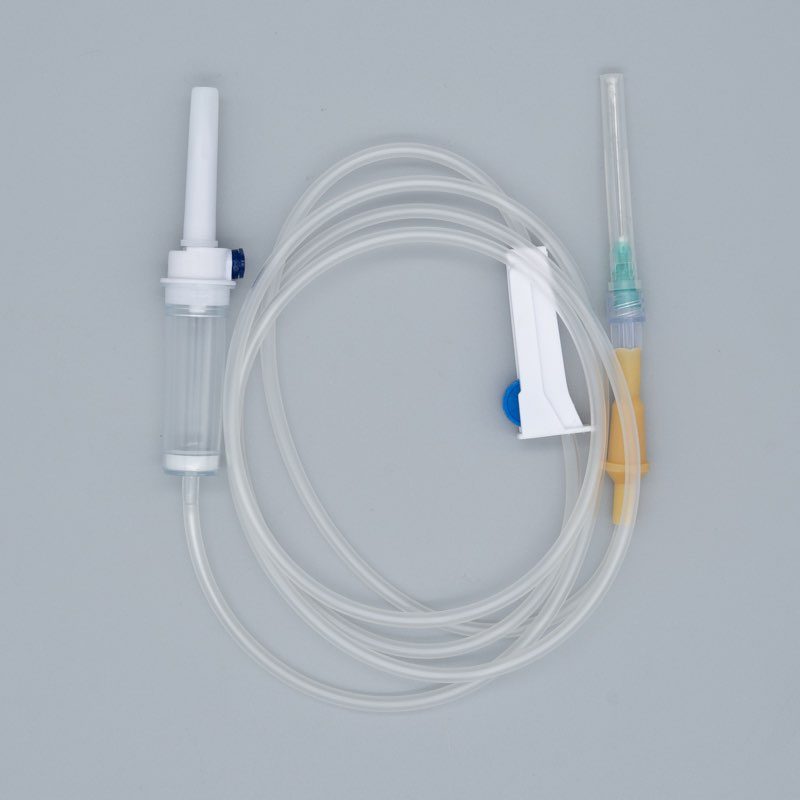
1. Define the device family before the specification
ISO 8536-4:2019 applies to sterile, single-use gravity-feed infusion sets and their compatibility with infusion-solution containers and intravenous equipment. ISO lists this sixth edition as current after confirmation in 2025, while a revision is under development. This means the 2019 edition remains the published reference at the time of this review—not that every future tender should accept it automatically.
| Required product | Route to a separate tender line |
|---|---|
| Standard gravity infusion set | ISO 8536-4 scope; define vent, drop factor, filter, tubing, ports and distal connector. |
| Burette set | ISO 8536-5 family; specify burette capacity, graduations, shut-off and air-inlet configuration. |
| Pressure/pump configuration | Use the applicable ISO 8536 pressure-infusion part and pump compatibility; do not assume a gravity set is suitable. |
| Volume-controller set | ISO 8536-16:2025 applies to single-use gravity sets with volumetric delivery controllers. |
| Blood transfusion set | ISO 1135-4:2025 family; blood-filter and transfusion requirements differ from solution-infusion sets. |
2. Copy-ready baseline tender wording
Example baseline—replace every bracketed field
- Sterile, single-use gravity-feed infusion set for administration of infusion solution from [collapsible bag / rigid container / both] to an intravascular access device; [vented / non-vented].
- Nominal drop factor: [20 / 60] drops/mL, verified under the applicable ISO 8536-4 test; transparent drip chamber; fluid filter conforming to ISO 8536-4, with any additional nominal pore requirement stated separately.
- Transparent, kink-resistant tubing: material [declare]; at least 150 cm from the distal end to the drip chamber, including any injection site and male connector; flow regulator [roller clamp / specified alternative].
- Distal connector: [Luer lock / Luer slip]; injection access: [none / one Y-site / specified needle-free port]; [without needle / with needle of stated gauge and length].
- Product to conform to ISO 8536-4:2019 or a later edition accepted by the destination regulator. Applicable Luer connection to ISO 80369-7:2021; supplied needle to ISO 7864:2016.
- Individually packed in a validated sterile-barrier system. Manufacturer shall declare materials, latex and DEHP status, sterilization method, shelf life, storage conditions, registered configuration and every deviation.
3. Standards matrix for a gravity infusion set
Use only standards that apply to the offered SKU. Edition status below was checked on 20 August 2026; procurement teams must confirm the editions recognized in the destination market before issue.
| Standard | Purpose in the tender |
|---|---|
| ISO 8536-4:2019 | Requirements for sterile, single-use gravity-feed infusion sets, including compatibility interfaces, materials, component designations, performance and labelling within its scope. |
| ISO 80369-7:2021 | Dimensions and functional performance of Luer connectors for intravascular and hypodermic applications; it does not replace ISO 8536-4 requirements for the container-closure piercing interface. |
| ISO 7864:2016 | Sterile single-use hypodermic needle requirements when a needle is supplied with the set. |
| ISO 11135:2014 + Amd 1:2018 | Development, validation and routine control of ethylene oxide sterilization when EO is used. |
| ISO 10993-7:2026 | Allowable limits and measurement framework for EO and ECH residuals in EO-sterilized devices. |
| ISO 11607-1:2019 + Amd 1:2023 | Sterile-barrier and packaging-system requirements for terminally sterilized medical devices. |
| ISO 15223-1:2021 + Amd 1:2025 | Symbols used with manufacturer-supplied medical-device information. |
| ISO 20417:2026 | General requirements for identification, labels, packaging information and accompanying information. |
4. Build a configuration schedule for every SKU
| Field | What the buyer must state |
|---|---|
| Container interface | Bottle, collapsible bag or both; piercing device and protective cap; vented/non-vented configuration. |
| Air inlet | Required/not required; closure and air-filter requirement where fitted. |
| Drip chamber | Required ISO 8536-4 design: 20 or 60 drops/mL; chamber size/visibility and flexible priming behavior. |
| Fluid filter | Fluid filter required by ISO 8536-4, with standard performance evidence; state any additional nominal pore rating as a buyer requirement. |
| Tubing | Material, ISO minimum 150 cm length (defined from distal end to drip chamber), transparency, kink resistance and special drug/light compatibility. |
| Flow control | Roller clamp or other regulator, operating range and secure shut-off expectation. |
| Injection access | None, Y-site, resealable site or needle-free port; number, location and compatibility. |
| Patient-end connector | Luer lock or Luer slip; protective cap; no ambiguous “universal connector” wording. |
| Needle | Without needle or with specified gauge, nominal outside diameter, length, bevel, hub and sheath. |
| Commercial identity | Catalogue number, brand/OEM status, legal manufacturer, manufacturing site and destination registration. |
5. Match the piercing device, vent and container
Name the infusion-solution containers used by the hospital: collapsible bags, rigid bottles or both. A vented set permits filtered air to enter where a non-collapsible container requires air replacement; a collapsible bag generally does not require this pathway. Require the supplier to identify the validated compatible container closures and to provide evidence for penetration, retention, leakage and functional compatibility under the applicable ISO 8536-4 tests. Do not ask for “vented or non-vented” as an unresolved choice.
6. Specify drop factor and flow performance separately
Drop factor is the nominal number of drops that represents one millilitre—not a guaranteed infusion rate in mL/h. ISO 8536-4 defines drip-tube designs of 20 drops/mL or 60 drops/mL under specified test conditions. State which factor is required and request the corresponding test evidence. Products labelled 10 or 15 drops/mL may exist in some markets, but should not be accepted under this clause without a documented alternative standards and regulatory basis. Flow also changes with liquid properties, fluid head, cannula resistance, filter, tubing and clamp position, so do not infer dosing accuracy from the chamber label alone. See the IV drip-rate and drop-factor guide for calculation examples.
7. Define the drip chamber, fluid filter and air filter
Require a transparent, observable drip chamber and the fluid filter required by ISO 8536-4; request performance evidence mapped to the standard. If the buyer also wants a nominal pore rating, state it as an additional requirement. For a vented set, define the air-filter configuration and evidence. UNICEF's catalogue item specifies 20 drops/mL, a 15–20 μm fluid filter, a bacteriological air filter and at least 150 cm of tubing. Its pore range is buyer-specific; the 150 cm length aligns with the ISO minimum, and 20 drops/mL is one of the two ISO designs rather than the only permitted factor.
8. Control tubing materials and drug compatibility
- Declare the material of tubing, chamber, spike, clamp, filters, ports, connectors and caps.
- State the effective tubing length and required transparency, flexibility and resistance to kinking.
- If “DEHP-free,” “PVC-free” or “latex-free” is required, define what components and packaging the claim covers and request supporting declarations or test evidence.
- Procure light-protective, low-sorption or drug-specific sets as separate SKUs when clinical use requires them; do not assume the standard clear set is compatible with every formulation.
- Require biological-evaluation evidence appropriate to contact type, duration, materials and destination regulation, plus advance notification of critical material changes.
9. Lock the Luer connector, ports and optional needle
A Luer lock connector uses a threaded secure connection; a Luer slip connector uses a push fit. Select the one used by the target catheter or cannula system and price each variant separately. Define whether the set has no injection point, a Y-site, a resealable elastomer site or a needle-free connector. State the number and location of ports and request performance/compatibility evidence. If a hypodermic needle is packed with the set, control gauge, outside diameter, length, bevel, hub and protective sheath and apply ISO 7864.
Review typical configurations before issuing the RFQ: Luer lock infusion set, Luer slip infusion set, Luer lock set with Y-port and large-chamber infusion set.
10. Require product-specific performance evidence
Ask the bidder for a compliance matrix mapped to the applicable ISO 8536-4 clauses and the exact offered product family. Evidence should address the relevant physical, chemical, biological, functional and labelling requirements, including—where applicable—particulate contamination, leakage, joint integrity, piercing-device performance, air inlet, filters, drip chamber, tubing, flow regulator, fluid flow and connector performance. Request report number, laboratory, date, tested catalogue number and configuration. A report for another tubing material, vent, drop factor or connector is not automatically representative.
Avoid inventing numerical limits from memory or reproducing copyrighted standard text. Purchase the standard, cite its edition, and add only the buyer's justified requirements and acceptance method.
11. Sterilization, biological safety and shelf life
- Require sterile, single-use status and name the sterilization method.
- For EO, request the current sterilization-site identification, validation summary, routine release approach and EO/ECH residual evidence.
- Request a biological-evaluation summary tied to the offered materials and intended contact.
- State claimed shelf life and minimum remaining shelf life when goods arrive at the named destination or pass contractual acceptance.
- Request real-time or justified ageing evidence and packaging validation supporting the full claim.
- Define storage and transport conditions only where supported by validated product information.
12. Sterile barrier, labels and export cartons
- Individual sterile-barrier format, material, seal integrity, peelability and protection of both end caps.
- Unit label: product/configuration, sterile and single-use status, lot, manufacture/expiry dates, manufacturer and applicable symbols.
- Destination-language label/IFU, importer or authorized-representative details, registration number, barcode or UDI where legally required.
- Units per inner box and export carton, carton dimensions, gross/net weight, moisture protection and pallet pattern.
- Written artwork approval and barcode verification before mass production.
13. Separate bid-stage and shipment-stage documents
With the bid
- Product data sheet, catalogue number, configuration drawing and completed compliance/deviation schedule.
- ISO 13485 certificate showing scope, site, issuer and validity.
- Destination-market registration, authorization, classification or declaration of conformity as applicable.
- ISO 8536-4 and applicable connector/needle test evidence mapped to the exact offered SKU.
- Sterilization, residual, biological evaluation, packaging and shelf-life summaries.
- Labelled sample/artwork and manufacturer authorization for the bidder or importer where required.
With each shipment
- Invoice, packing list, transport document and certificate of origin as contracted.
- Batch certificate or certificate of analysis/conformity identifying every shipped lot.
- Agreed sterilization-release evidence for the shipped sterilization lots.
- Final inspection report, carton/pallet list, loading photographs and required legalization documents.
- Traceability linking purchase order, finished lot, sterilization lot and release record.
14. Write an independent lot-acceptance plan
ISO 8536-4 is a product requirement and test standard; it is not the buyer's complete contractual lot-release plan. Define the sampling standard or method, inspection level, AQL where used, defect classes, sample-selection authority, pre-shipment tests, reinspection rules and remedies. Treat sterile-barrier loss, wrong configuration, blocked fluid path and critical leakage separately from minor print or cosmetic defects. Agree the plan and sealed reference samples before production.
15. Commercial fields an importer should not omit
- Quantity by exact SKU and annual forecast; permitted over/under-delivery and partial shipment.
- Incoterm plus named port/place; quotation currency and validity.
- MOQ by vent, drop factor, connector, port, needle and private-label artwork.
- Sample/first-article approval, artwork approval and the event that starts production lead time.
- Remaining shelf life at destination, inspection window and consequences for failed or late lots.
- Change-notification period covering materials, component suppliers, tooling, manufacturing/sterilization sites, packaging and regulatory status.
- Responsibility for registration, legalization, inspection, banking, demurrage and destination-language artwork costs.
16. Common infusion-set tender mistakes
- Putting gravity, burette, pressure and blood sets under one generic “IV set” line.
- Leaving bottle/bag compatibility, vent, drop factor, tubing length or connector unspecified.
- Allowing 10 or 15 drops/mL under an ISO 8536-4 clause without another documented basis, treating 15–20 μm as an ISO pore-size mandate, or making the 150 cm minimum tubing length optional.
- Requesting “CE and ISO” without naming the legal manufacturer, exact SKU, destination authorization and evidence.
- Using “DEHP-free” or “latex-free” without defining the claim boundary and documents.
- Accepting a test report for a materially different vent, tubing material, port or connector.
- Setting shelf life at factory release instead of remaining shelf life at destination.
- Omitting a deviation schedule, artwork approval, change control and lot-acceptance plan.
17. Frequently asked questions
Is ISO 8536-4 conformity enough to approve an infusion set supplier?
No. ISO 8536-4 addresses the product requirements and tests for a defined gravity-feed infusion-set family. Buyers must also verify destination-market authorization, the manufacturer's quality system, sterilization and packaging evidence, the offered SKU, and the contractual lot-acceptance plan.
Does ISO 8536-4 require every infusion set to have a 20 drops/mL drop factor?
No. ISO 8536-4 specifies 20 drops/mL or 60 drops/mL drip-tube designs under its defined test conditions. State which one is required and request test evidence. If a supplier offers 10 or 15 drops/mL, require the applicable standard and regulatory basis instead of assuming that configuration meets the ISO 8536-4 drop-count requirement.
Can a standard infusion set, burette set and blood transfusion set share one tender line?
No. They have different intended uses, components and applicable standards. Use separate line items for standard gravity infusion sets, burette or volume-control sets, pressure sets and blood transfusion sets.
When should a tender specify a vented infusion set?
Specify a vented set when the intended container and clinical system require air to enter a rigid or non-collapsible container. Collapsible bags generally use a non-vented configuration. The buyer should define the container types instead of leaving venting to assumption.
Should an importer request Luer lock or Luer slip?
State one connector per SKU. Luer lock provides a threaded secure connection; Luer slip uses a push fit. Both must match the intended vascular-access device and applicable connector requirements. If both are acceptable, obtain separate prices and product evidence.
Should the specification say ISO 8536-4 latest edition?
Only when procurement rules and the destination regulator can manage an edition change during the contract. A clearer clause cites the accepted edition and permits a later recognized edition only with documented equivalence and regulatory acceptance.
18. Final RFQ checklist
Before release, verify that every line answers these questions: exact set family; container and vent; drop factor; chamber and filters; tubing material and length; clamp; ports; distal connector; optional needle; sterile barrier; shelf life; destination registration; bid documents; shipment documents; sampling plan; packing; quantity; Incoterm; deviations and change control. Require every bidder to mark each clause Comply / Deviate / Not Applicable and identify the supporting document.
Request a comparable infusion-set tender quotation
Browse the infusion set range, review quality and regulatory information, or discuss OEM/private-label packaging. Send us your completed configuration schedule for a line-by-line response.
Request an infusion set quotationPrimary references
- ISO 8536-4:2019 — Infusion equipment for medical use, Part 4
- ISO 80369-7:2021 — Connectors for intravascular or hypodermic applications
- ISO 7864:2016 — Sterile hypodermic needles
- ISO 10993-7:2026 — Ethylene oxide sterilization residuals
- ISO 11607-1:2019 — Sterile barrier systems
- UNICEF Supply Catalogue — Infusion giving set, standard
- ISO 1135-4:2025 — Single-use blood transfusion sets