
Disposable Medical Supplies Manufacturer for Brazilian Importers
ANVISA-ready documentation · Portuguese-language OEM · FOB Santos / Paranaguá / Itajaí · Updated May 2026
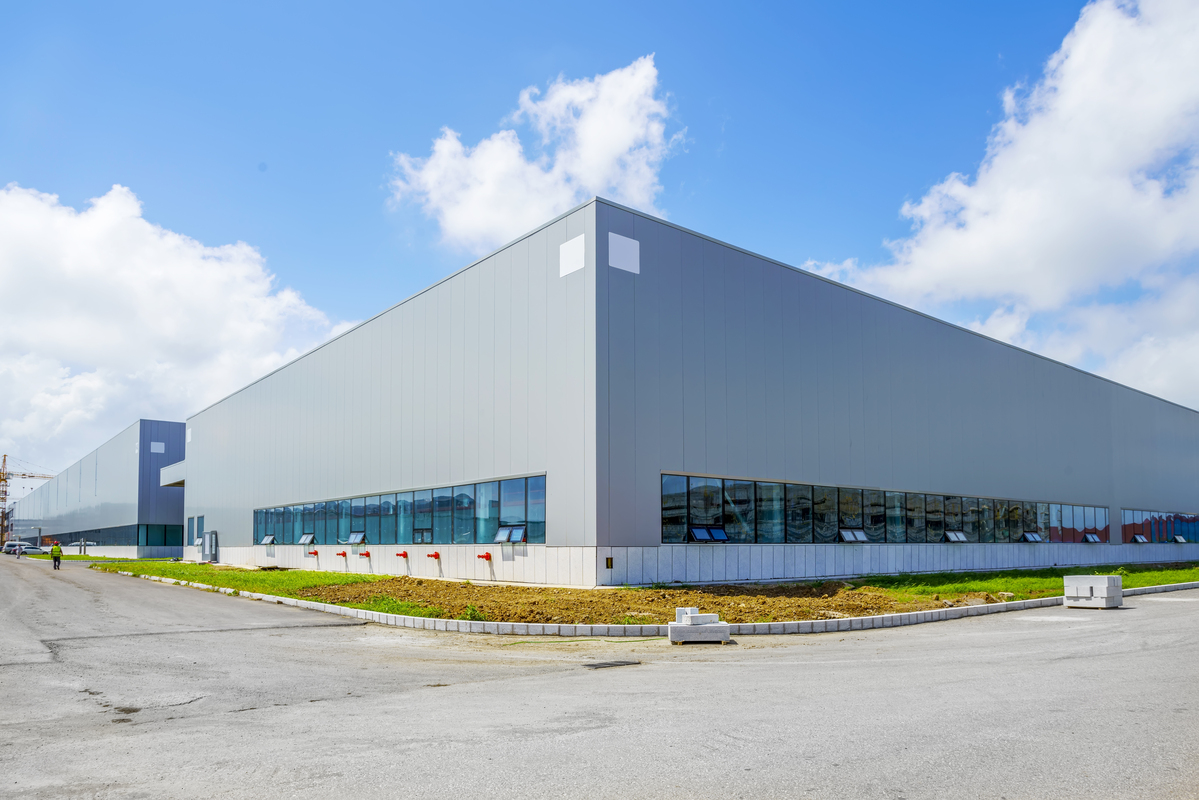
Quick orientation for Brazilian importers. HEZE YINUO MEDICAL has supplied disposable medical devices — syringes, infusion sets, hypodermic and IV needles, oxygen and anesthesia masks, gowns, and catheters — to Brazilian distributors for over a decade. We hold ISO 13485:2016 and CE Marking, ship FOB Shanghai or Qingdao to the Port of Santos (and other major Brazilian ports), and provide ANVISA-ready technical dossiers, Free Sales Certificates and Portuguese-language artwork at the OEM stage. This page summarises what a Brazilian importer needs to source disposable medical products from China under RDC 751/2022: the regulatory framework, the documents we provide, MOQ economics, ports and lead time, and the common pitfalls to avoid.
1. The Brazilian regulatory framework: ANVISA and RDC 751/2022
Medical devices sold in Brazil are regulated by ANVISA (Agência Nacional de Vigilância Sanitária), the federal health regulatory agency. The current framework is RDC 751/2022, which took effect in 2022 and replaced the long-standing RDC 185/2001. Under RDC 751:
- Devices are classified into four risk classes (I, II, III, IV) based on intended use, duration of contact, and invasiveness — broadly aligned with EU MDR categories.
- Class I (low risk: simple gowns, gauze, basic disposable items) requires a notification (Notificação), a streamlined process typically completed in 30–60 days.
- Class II (medium risk: most disposable syringes, infusion sets, needles, IV cannulas, foley catheters) requires registration (Registro) with a full technical dossier, typically 6–12 months for approval.
- Class III and IV (high and very high risk: implantables, electromedical devices, devices with specific risk profiles) require registration plus stricter technical evaluation, typically 12–24 months.
- The registration is held by a Brazilian importer or local representative (Detentor do Registro) — never directly by the foreign manufacturer.
A Chinese manufacturer like HEZE YINUO MEDICAL is therefore the technical partner in the registration process, not the registrant. Our role is to provide a complete, audit-ready dossier the importer submits via the ANVISA portal.
2. The dossier we provide for ANVISA submission
For each SKU you intend to import, we provide a manufacturer's package containing the documents most ANVISA dossiers require. Standard contents:
- ISO 13485:2016 certificate with current expiry — proves quality management system compliance.
- CE Certificate under EU MDR (where applicable) — accepted by ANVISA as supporting evidence of regulatory compliance, although it does not replace ANVISA registration.
- Free Sales Certificate (Certificado de Livre Venda) — a notarised statement issued by the manufacturer's home authority confirming that the product is freely sold in the country of origin. We arrange this through CCPIT (China Council for the Promotion of International Trade).
- Declaration of Conformity — a manufacturer-issued document mapping the product to applicable ISO and IEC standards.
- Technical file — bill of materials, manufacturing process, sterilisation validation, biocompatibility (ISO 10993) test reports, design verification and validation summaries.
- Stability and shelf-life data — accelerated and real-time studies supporting the labeled expiry.
- Product specification sheet with photos, dimensional drawings, materials and intended use.
- Manufacturing site declaration — confirming the address and scope of the listed factory.
- Notarisation and consularisation through the Brazilian Consulate in China where required for higher-class submissions.
The importer typically arranges Portuguese translation of these documents through a local regulatory consultancy. We support that process with native-format files (Word, PDF, original CAD where requested) so the translation is straightforward.
3. BPF and the question of factory inspection
BPF (Boas Práticas de Fabricação) is the Brazilian Good Manufacturing Practices regulation — comparable in scope to ISO 13485:2016 plus elements of US FDA Quality System Regulation (21 CFR 820). For Class III and IV registrations, ANVISA may either:
- Conduct an in-person inspection at the manufacturing site in China (rare, expensive for the importer); or
- Accept evidence of ISO 13485 certification combined with audits from a recognised foreign authority such as a Notified Body under EU MDR or FDA inspections.
For Class I and II products — which cover the bulk of standard disposables — BPF compliance is generally evidenced through the ISO 13485 certificate and a manufacturer self-declaration. We are audit-ready and have hosted multiple foreign quality audits on site.
4. Portuguese-language labeling and artwork
Brazilian regulations require all medical-device labeling and instructions for use (IFU) to be in Brazilian Portuguese. Mandatory label content:
- Product name and model in Portuguese
- Importer's name, address and CNPJ (Brazilian tax ID)
- ANVISA registration number (added once granted)
- Manufacturer's name and country of origin (Made in China)
- Lot number, manufacturing date and expiry date
- Sterilisation method (EO, gamma) and validation reference where applicable
- Storage conditions and any usage warnings
- CE Mark (when the product is also CE marked)
We support full Portuguese-language OEM artwork at the unit-pack, blister, inner-box and outer-carton levels. Send us your importer's CNPJ, address, ANVISA number (once granted) and product naming convention; we incorporate it into print-ready artwork during the OEM tooling phase. First-run plate-making typically adds 7–10 days to lead time.
5. Logistics: ports, lead time and Incoterms
Major Brazilian ports we ship to
- Port of Santos (São Paulo) — by far the largest port in Latin America, the default for distributors based in São Paulo, Rio and the South-East. Most of our Brazilian shipments route here.
- Paranaguá (Paraná) — main port for Paraná, Santa Catarina and the South region.
- Itajaí (Santa Catarina) — alternative to Paranaguá for Southern Brazil; sometimes faster customs clearance.
- Suape (Pernambuco) — main port for the Northeast region (Recife, Salvador metro corridors).
- Manaus (Amazonas) — for Manaus Free Trade Zone (Zona Franca de Manaus) tax-advantaged imports.
Sea-freight transit times
From Shanghai or Qingdao to Santos: typically 35–45 days port-to-port, depending on routing and any transhipment in Singapore or Cape Town. Add 3–7 days for customs clearance via SISCOMEX (the Brazilian foreign trade system) plus inland trucking to the importer's warehouse. Total order-to-warehouse cycle: typically 70–85 days from PO confirmation.
Air freight option
For urgent restocking or initial samples, air freight to GRU (Guarulhos / São Paulo) or VCP (Viracopos / Campinas) takes 2–3 days at 4–6× the freight rate per kilo. We can split a single PO between sea (bulk volume) and air (urgent SKUs) at no production overhead.
Incoterms and quote format
We typically quote FOB Shanghai or FOB Qingdao in USD. CIF Santos quotes are available on request and can simplify the importer's freight forwarder coordination. Payment terms: 30% T/T deposit on PO, 70% balance against B/L copy. L/C at sight is supported for established customers. We do not currently offer DDP terms into Brazil because of the complexity of Brazilian import duties (II, IPI, PIS, COFINS, ICMS).
6. Our experience with Brazilian importers
We have shipped to Brazilian distributors continuously since 2014. Our typical Brazilian customer is a regional medical-supply distributor based in São Paulo, Rio Grande do Sul, Minas Gerais or Bahia, importing 3–10 SKUs of disposables under their own brand for resale to public hospitals (SUS), private hospital networks, clinics and pharmacies. Common SKU mix in Brazilian shipments:
- Luer Slip syringes 1ml–10ml — the volume-leading SKU for routine ward use
- Luer Lock syringes 3ml–60ml — preferred for ICU, oncology and infusion settings
- Insulin syringes with fixed needle — high volume for diabetes care channels
- Y-port IV infusion sets — adult inpatient default in most Brazilian hospitals
- IV cannulas 18G–24G — colour-coded per ISO standard
- Scalp vein / butterfly sets — paediatric and short-line use
- Disposable face masks and surgical gowns
- Latex and silicone Foley catheters
For SUS tenders specifically, our Class II disposables typically clear ANVISA registration in 6–9 months when the importer's regulatory submission is well-prepared. For PROADI-SUS partnership programmes (private hospitals running public health initiatives), we can supply at tender-volume pricing with documentation in the format used by SUS-affiliated procurement.
7. MOQ and pricing for the Brazilian market
Brazilian importers receive the same MOQ structure as our other export markets — there is no Brazil premium or surcharge, and lot sizes scale with the importer's container plan. Typical MOQ per SKU per production run:
- Standard syringes 1ml–10ml: 100,000–500,000 pieces
- Auto-disable / safety syringes: 50,000 pieces
- Insulin syringes: 200,000 pieces
- IV infusion sets: 30,000–50,000 sets
- Y-port and burette sets: 20,000–30,000 sets
- Disposable face masks: 1,000,000 pieces (commodity SKU)
- Surgical gowns: 5,000–10,000 pieces
- Foley catheters: 5,000–10,000 pieces per Fr size
Pricing is quoted per unit in USD on FOB or CIF basis. Tiered discounts apply at 100k, 500k and 1M unit thresholds. Custom OEM artwork adds a one-time tooling fee (typically USD 200–500 per artwork) but no per-unit premium.
8. Common pitfalls Brazilian importers should plan for
- Underestimating ANVISA timelines. Class II registration can take 9–12 months even with a clean dossier. Start the regulatory submission in parallel with the first sample order, not after.
- Importing under a single registration when multiple SKUs are needed. Each technically distinct SKU (different dimension, different material) is a separate registration. Bundle product families into one registration only where the technical file genuinely covers all variants.
- Skipping the Free Sales Certificate. ANVISA dossiers without a valid FSC from the country of origin are routinely rejected. Allow 4–6 weeks to obtain a notarised, consularised FSC through CCPIT.
- Mismatched importer information on labels. A change of importer or a CNPJ update mid-shipment forces relabeling. Confirm the importer's regulatory information block with us before plate-making.
- Underestimating import duties. Brazilian import duty structure (II + IPI + PIS + COFINS + ICMS) can add 40–80% on landed cost depending on product class and state. Use a Brazilian customs broker for the cost calculation, not a generic FOB-to-CIF estimate.
- Last-minute air freight. A planned sea shipment delayed by ANVISA timing creates pressure for emergency air freight at 4–6× cost. Build a 60–90 day buffer between expected ANVISA approval and your scheduled launch volume.
9. Frequently asked questions for Brazilian importers
Do I need ANVISA registration to import disposable medical supplies into Brazil?
Yes. All medical devices sold in Brazil must be either notified or registered with ANVISA, the Brazilian Health Regulatory Agency, under RDC 751/2022. The registration is held by a Brazilian importer or local representative — not the foreign manufacturer. As the manufacturer we provide the technical dossier, ISO 13485 certificate, Free Sales Certificate, and product specifications that the importer submits to ANVISA on your behalf.
Who is responsible for ANVISA registration — the manufacturer or the importer?
Under Brazilian law the importer (or a Brazilian-based regulatory representative) holds the ANVISA registration and is the legal responsible party (Detentor do Registro). The Chinese manufacturer supplies the supporting documentation: ISO 13485 certificate, manufacturing site declaration, technical file, test reports, Free Sales Certificate (Certificado de Livre Venda), and Declaration of Conformity. The importer translates the dossier into Portuguese and submits via the ANVISA portal.
How long does ANVISA registration take?
Class I notifications (low risk: gauze, basic gowns, simple disposables) are typically processed in 30–60 days. Class II products (medium risk: most syringes, infusion sets, needles, IV cannulas) take 6–12 months. Class III and IV (high risk: implantables, electromedical) can take 12–24 months. ANVISA timelines are public on the agency website. Plan your launch timeline accordingly and start the dossier process before placing your first production order.
Are CE Marking and ISO 13485 enough for Brazilian import, or do I need additional certificates?
CE Marking is recognised by ANVISA as supporting evidence but does not replace ANVISA registration. ISO 13485:2016 is required as evidence of the manufacturer's quality system. In addition you typically need: a Free Sales Certificate (FSC) from the country of origin, a Declaration of Conformity, BPF (Boas Práticas de Fabricação) compliance evidence, and depending on the product class, IEC/ISO test reports referenced in the technical file. We supply these as a package on request.
What is BPF and does the manufacturer need to be audited by ANVISA?
BPF is the Brazilian Good Manufacturing Practices standard, similar in scope to ISO 13485 plus FDA QSR. For Class III and IV products, ANVISA may either conduct a factory inspection in China or accept evidence of ISO 13485 certification combined with audits from a recognised foreign authority. For Class I and II, BPF is generally satisfied by ISO 13485 documentation. We hold a current ISO 13485:2016 certificate and have hosted overseas audits before.
What labeling is required for medical devices sold in Brazil?
All labels and instructions for use must be in Portuguese (Brazilian Portuguese). Required content includes: product name and model, importer's name and address (with CNPJ), ANVISA registration number, manufacturer's name and country of origin, lot number, manufacturing date, expiry date, sterilisation method (where applicable), storage conditions, and CE Mark (where applicable). We can produce Portuguese-language artwork at the OEM stage so the labels arrive print-ready.
Which Brazilian ports do you ship to and how long does sea freight take?
From Shanghai or Qingdao we typically quote FOB shipment to the Port of Santos (the largest Brazilian port), Paranaguá, Itajaí, or Suape (for Northeast Brazil). Sea-freight transit time is 35–45 days depending on routing and any transhipment. For urgent orders we can air-freight to GRU (Guarulhos / São Paulo) or VCP (Viracopos / Campinas) in 2–3 days at a freight premium.
What is the typical MOQ for Brazilian importers and how is pricing structured?
Brazilian buyers receive the same MOQ structure as our other export markets: 100,000–500,000 pieces per SKU for standard syringes, 30,000–50,000 sets for infusion sets, 1,000–5,000 units for larger items like masks and gowns. We typically quote FOB Shanghai or Qingdao in USD; CIF Santos quotes are also available on request. Payment terms are 30% T/T deposit and 70% balance against B/L copy, or L/C at sight for established customers.
Do you offer Portuguese-language OEM packaging and private label for Brazilian distributors?
Yes. Portuguese-language artwork on inner cartons, blister packaging and outer cartons is one of our most common OEM services for Brazilian customers. We support full private-label production: your brand on the unit pack, your importer's CNPJ in the regulatory text block, your ANVISA registration number once granted, and Brazilian-Portuguese instructions for use. Provide vector artwork (AI/PDF) plus the regulatory information block; first-run plate-making typically adds 7–10 days to lead time.
10. Next steps: how to request a Brazil-tailored quote
If you are an existing Brazilian importer or are evaluating a new supplier for ANVISA-registered SKUs, send us the following with your inquiry and we will respond within one working day:
- Target SKU list (capacity, connector type, gauge, packaging format)
- Annual or per-order target quantity
- Destination port (Santos, Paranaguá, Itajaí, Suape, Manaus)
- Existing or planned ANVISA registration class and status
- Importer name, address and CNPJ for OEM artwork (if applicable)
- Required documentation package (ISO 13485, CE, FSC, test reports, declaration of conformity)
We will return a tiered FOB or CIF quote in USD, the dossier package list, current MOQ and lead time, and any specific ANVISA documentation guidance for the SKU mix.
Request a Brazil-tailored quote
Related reading for medical device importers
- Importing into Vietnam — MoH Guide for Distributors
- Importing into the Philippines — FDA Phil Guide
- Importing into Nigeria — NAFDAC Guide for Distributors
- Importing into Indonesia — Kemenkes AKL Guide
- Importing into Mexico — COFEPRIS Guide for Distributors
- Importing into Egypt — EDA Guide for Distributors
- Importing into Saudi Arabia — SFDA MDNR Guide
- Importing into the UAE — MOHAP / DOH / DHA Guide
- CE vs ISO 13485 vs FDA — A Medical Device Importer's Compliance Guide
- How to Choose a Disposable Syringe Manufacturer for Bulk Import
- Luer Lock vs Luer Slip Syringes: Which to Choose
- Auto-Disable vs Standard Syringes: WHO PQ Requirements
- Infusion Set Components, Types & Compatibility Guide
- Browse our full product catalog (57+ disposable medical SKUs)