
Disposable Medical Supplies Manufacturer for Vietnamese Importers
MoH-ready documentation under Decree 98/2021 and 07/2023 · Vietnamese-language OEM · FOB Hai Phong / Ho Chi Minh · 5–10 day sea freight · Updated May 2026
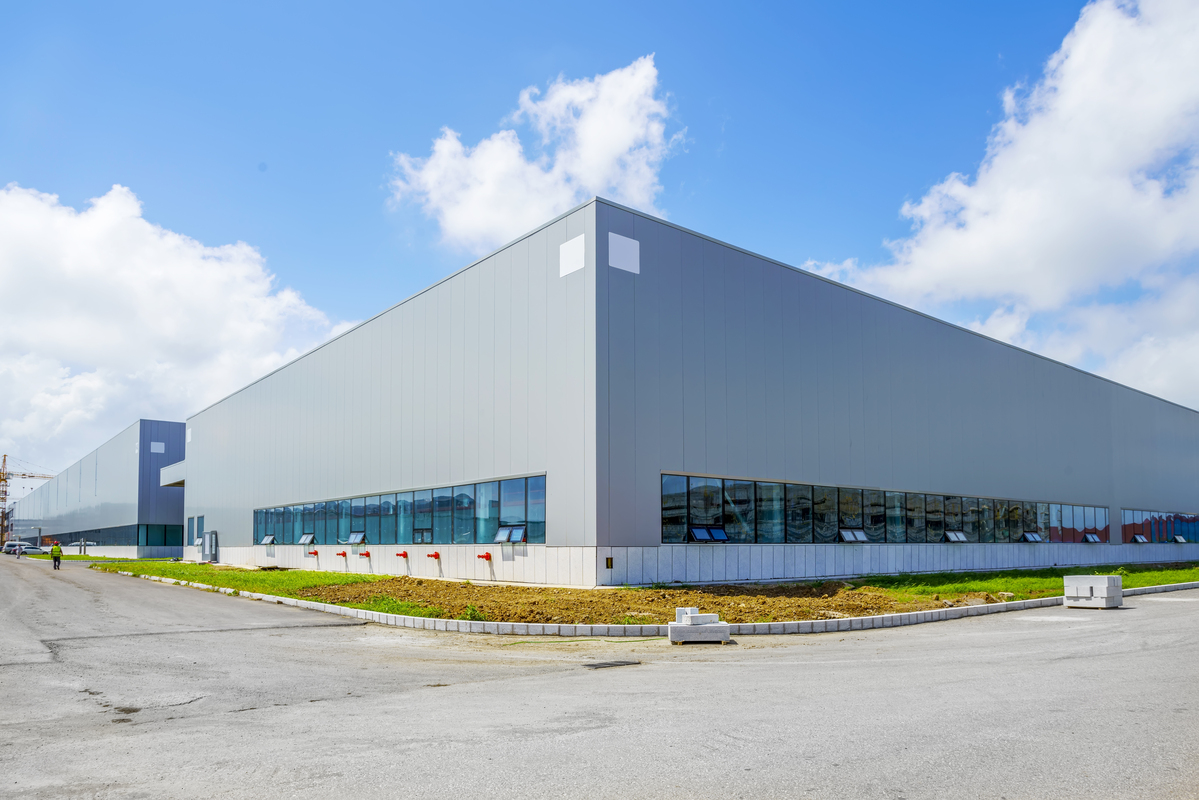
Quick orientation for Vietnamese importers. HEZE YINUO MEDICAL has supplied disposable medical devices — syringes, infusion sets, hypodermic and IV needles, oxygen and anesthesia masks, gowns, and catheters — to Vietnamese distributors for years. Vietnam is one of our fastest export routes thanks to geographic proximity: sea freight from Shanghai or Qingdao to Hai Phong or Ho Chi Minh runs 5–10 days port-to-port, less than half the time required to reach Indonesia and a fraction of the time to LATAM or Africa. We hold ISO 13485:2016 and CE Marking, provide MoH-ready technical dossiers under Decree 98/2021/ND-CP as amended by Decree 07/2023/ND-CP, and produce Vietnamese-language OEM packaging at the production stage. This page summarises what a Vietnamese importer needs to source disposable medical supplies from China: regulatory landscape, dossier package, MOQ economics, ports and lead time, and the procurement realities of BHXH-reimbursed hospitals and the National e-Bidding System.
1. The Vietnamese regulatory framework: MoH and Decree 98/2021
Medical devices sold in Vietnam are regulated by the Ministry of Health (Bộ Y Tế, MoH). The current framework is Decree 98/2021/ND-CP on the management of medical equipment, materially amended by Decree 07/2023/ND-CP, which simplified several procedural elements and extended grandfather provisions for previously-listed devices.
Vietnam uses a four-class risk scheme aligned with ASEAN AMDD principles:
- Class A (low risk): basic gauze, simple gowns, standard disposables — self-declaration submitted online, no full review
- Class B (medium-low risk): most disposable syringes, infusion sets, hypodermic and IV needles, IV cannulas, simple Foley catheters — full registration
- Class C (medium-high risk): long-term catheters, certain anesthesia devices — full registration with stricter evaluation
- Class D (high risk): implantables, electromedical devices — full registration with the most rigorous review
A Chinese manufacturer like HEZE YINUO MEDICAL cannot directly hold a Vietnamese registration. The registration or declaration is held by a Vietnamese-resident importer or local representative who acts as the regulatory anchor. Submissions are made via the MoH online medical-device registration system.
2. Importer / Local Representative requirements
Foreign manufacturers must work with a Vietnamese-resident entity to enter the market. Two arrangements are common:
- Importer-as-registrant — the importing distributor holds the MoH registration directly and acts as the legal point of contact. This is the default and simplest structure.
- Authorized Representative + separate distributor — for foreign manufacturers wishing to keep distribution flexible across multiple importers, a regulatory consultancy or holding company holds the registration and licenses distribution to multiple commercial partners.
We adapt the manufacturer authorisation letter (Letter of Authorization, LoA) and dossier package to whichever structure you choose. Vietnamese law requires that the entity holding the registration be incorporated and operational in Vietnam, hold appropriate medical-device business activity codes on its business registration certificate, and have a registered office address.
3. The dossier we provide for MoH submission
For each SKU you intend to register, we provide a manufacturer's documentation package covering the standard MoH technical-file requirements under Decree 98/2021 and 07/2023:
- ISO 13485:2016 certificate with current expiry, issued by a recognised certification body
- CE Certificate under EU MDR or FDA 510(k) clearance — recognised by Vietnamese MoH as accelerating evidence for Classes B, C and D
- Free Sales Certificate (FSC) notarised in China and legalised through the Vietnamese Embassy in Beijing
- Letter of Authorization (LoA) from the foreign manufacturer to the Vietnamese importer or representative
- Declaration of Conformity mapping the product to applicable IEC/ISO standards
- Technical file (CSDT format) — bill of materials, manufacturing process, sterilisation validation, ISO 10993 biocompatibility, design verification
- Stability and shelf-life data
- Manufacturing site declaration
- Product specification sheet with photos, dimensions, materials and intended use
The importer arranges Vietnamese translation of any documents the MoH requires in local language (typically the IFU, labels and product specification summary) and submits the complete dossier through the MoH online portal.
4. Registration timelines under Decree 07/2023
Indicative timelines for a complete first submission:
- Class A self-declaration: 5–10 working days — essentially a notification, with the device cleared for sale once the declaration is accepted
- Class B: 60–90 working days
- Class C: 90–120 working days
- Class D: 120–180 working days
Vietnam significantly streamlined the medical-device registration process via Decree 07/2023, which extended grandfather provisions for products previously listed under the older framework and simplified document requirements for many product classes. Resubmission cycles for missing documents remain the most common cause of delay; a clean dossier with valid CE Marking can clear Class B in 2–3 months in our experience.
5. Vietnamese labeling and OEM artwork
Vietnamese MoH requires medical-device labels and instructions for use to be in Vietnamese (Tiếng Việt). Bilingual Vietnamese-English is acceptable and is the most common configuration we produce. Mandatory label content:
- Product name and model in Vietnamese (and English where bilingual)
- Manufacturer name and country of origin (Made in China / Sản xuất tại Trung Quốc)
- Importer name and Vietnamese address with tax code (Mã số thuế)
- MoH registration or declaration number once granted
- Lot number, manufacturing date, expiry date
- Sterilisation method (EO, gamma) and indicator
- Storage conditions and any usage warnings
- CE Mark or FDA reference where applicable
We support full Vietnamese or bilingual Vietnamese-English artwork at the unit-pack, blister, inner-box and outer-carton levels. Vietnamese tone marks (diacritics) are fully supported in our printing. Provide your importer's name, Vietnamese address, tax code, and product naming conventions; we incorporate them into print-ready artwork during the OEM tooling phase. First-run plate-making typically adds 7–10 days to lead time.
6. Logistics: Vietnamese ports and lead time
Major Vietnamese ports we ship to
- Hai Phong — the dominant northern port serving Hanoi, the Red River Delta and the entire north of the country. Multiple terminals (Hai Phong Port, Tan Vu Container Terminal, HICT) handle different volume classes.
- Ho Chi Minh / Cat Lai Port — the dominant southern port serving Ho Chi Minh City, Binh Duong and Dong Nai industrial zones.
- Cai Mep–Thi Vai — deepwater container terminal serving the south, increasingly used for direct large-vessel calls and onward feeder routing.
- Da Nang — central Vietnam port for distributors based in the centre of the country (Da Nang, Hue, Quang Nam).
Sea-freight transit times
From Shanghai or Qingdao to Hai Phong: typically 4–7 days port-to-port. To Ho Chi Minh: 6–10 days. To Cai Mep: 5–8 days. Vietnam is among the fastest sea-freight routes in our network, second only to direct service to nearby Asian ports. Add 2–4 days for Vietnamese customs clearance plus inland trucking. Total order-to-warehouse cycle: typically 40–55 days from PO confirmation, the shortest among our long-haul export markets.
Air freight option
Air freight to Hanoi (HAN) or Ho Chi Minh City (SGN) takes 1–2 days. Combined with the short sea-freight window, Vietnam is uniquely flexible for staged or split shipments.
Incoterms and quote format
We typically quote FOB Shanghai or FOB Qingdao in USD. CIF Hai Phong or CIF Ho Chi Minh quotes are available. Payment terms: 30% T/T deposit on PO, 70% balance against B/L copy. T/T is the dominant instrument for Vietnam due to short transit times and established trade relationships; L/C is supported for first orders or larger exposures.
7. BHXH, e-bidding and Vietnamese public-sector procurement
Vietnamese medical-supply demand is anchored by:
- BHXH (Bảo hiểm xã hội Việt Nam) — Vietnam Social Security, the national health insurance administrator. BHXH does not directly procure medical supplies but reimburses hospitals for care delivered to insured patients, indirectly driving the disposable-supply demand across both public and private hospital networks. Coverage is broad and continues to expand.
- National e-Bidding System (Mạng đấu thầu Quốc gia) — the central electronic procurement platform for public hospitals, government health entities and ministry-affiliated buyers. Tenders are published, bid and awarded through this platform.
- Provincial Department of Health tenders — each of Vietnam's 63 provinces / centrally-controlled cities runs procurement for state-funded hospitals.
- Private hospital chains — Vinmec (Vingroup), Hoan My Medical Corporation, Hong Ngoc, Phuong Chau and others.
From the manufacturer side, we provide all the upstream documentation that supports a Vietnamese public-sector bid: ISO 13485, CE, Free Sales Certificate, validated test reports, biocompatibility data, sterilisation validation and stability studies. Many of our long-standing Vietnamese distributors operate as approved e-bidding suppliers.
8. Our experience with Vietnamese importers
We have shipped to Vietnamese distributors continuously since the late 2010s. Our typical Vietnamese customer is a Hanoi- or Ho Chi Minh City-based medical-supply importer holding MoH registration capability and the appropriate business registration, importing 5–15 SKUs of disposables under their own brand for resale to BHXH-affiliated hospitals, government tenders via the national e-bidding system, private hospital groups and pharmacy chains. Common SKU mix in Vietnamese shipments:
- Luer Slip syringes 1ml–10ml — high volume for routine clinical use
- Luer Lock syringes 3ml–60ml
- Insulin syringes
- Auto-disable syringes for vaccination programmes
- Y-port IV infusion sets
- IV cannulas 18G–24G
- Scalp vein / butterfly sets
- Face masks, KN95 respirators, surgical gowns
- Silicone Foley catheters and feeding tubes
- Anesthesia breathing circuits and endotracheal tubes
9. MOQ and pricing for the Vietnamese market
Vietnamese buyers receive the same MOQ structure as our other export markets. Typical MOQ per SKU per production run:
- Standard syringes 1ml–10ml: 100,000–500,000 pieces
- Auto-disable / safety syringes: 50,000 pieces
- Insulin syringes: 200,000 pieces
- IV infusion sets: 30,000–50,000 sets
- Y-port and burette sets: 20,000–30,000 sets
- Disposable face masks: 1,000,000 pieces
- Surgical gowns: 5,000–10,000 pieces
Pricing is quoted per unit in USD on FOB or CIF basis. National e-Bidding System SKUs typically attract tiered pricing at 100k, 500k and 1M+ unit thresholds. OEM artwork adds a one-time tooling fee (USD 200–500 per artwork). Short transit times mean Vietnamese importers can run leaner inventory than buyers in further markets — discuss replenishment cadence with us at quote time.
10. Common pitfalls Vietnamese importers should plan for
- Confusing Decree 98/2021 with the older 36/2016 framework. The current framework is Decree 98/2021 as amended by 07/2023. Older guidance referencing Decree 36/2016 is out of date.
- Class A under-declaration. Some products that appear simple are technically Class B under Vietnamese classification (e.g. IV cannulas). Confirm the class with your importer's regulatory affairs team before submitting a self-declaration that may be rejected.
- Skipping legalisation of the FSC. The Vietnamese Embassy in Beijing requires legalised Free Sales Certificates. Allow 4–6 weeks for the full legalisation chain.
- English-only labels. Vietnamese is mandatory. Bilingual Vietnamese-English is the practical solution and what we usually produce.
- Underestimating bidding documentation. National e-Bidding System tenders publish detailed documentation requirements. Missing a single document on submission day disqualifies the bid.
- Last-minute changes to importer. Any change to the regulatory information block forces relabeling. Confirm the regulatory text with us before plate-making.
11. Frequently asked questions for Vietnamese importers
Do I need MoH registration to import disposable medical devices into Vietnam?
Yes. All medical devices sold in Vietnam must be either declared (Class A) or registered (Classes B, C, D) with the Vietnamese Ministry of Health (Bộ Y Tế / MoH) under Decree 98/2021/ND-CP, as amended by Decree 07/2023/ND-CP. The registration is held by a Vietnamese-resident importer or local representative. As the Chinese manufacturer we provide the technical dossier, ISO 13485 certificate, CE certificate and Free Sales Certificate that the importer submits to the MoH online registration system.
How does the Vietnamese risk classification work?
Vietnam uses a four-class risk scheme (A, B, C, D) aligned with ASEAN AMDD principles. Class A is low risk and requires only a self-declaration submitted via the online portal. Classes B, C and D are medium-low, medium-high and high risk respectively, and require full registration with technical dossier review. Most disposable syringes, infusion sets, hypodermic and IV needles, IV cannulas and Foley catheters fall into Class B.
How long does Vietnamese MoH registration take?
Indicative timelines for a complete first submission under Decree 07/2023: Class A self-declaration is typically processed within 5–10 working days; Class B — 60–90 working days; Class C — 90–120 working days; Class D — 120–180 working days. Vietnam has streamlined the process via the online MoH medical device portal and timelines have improved meaningfully. Resubmission cycles for missing documents are the most common cause of delay.
Are CE Marking and ISO 13485 enough for Vietnamese MoH registration?
CE Marking and US FDA 510(k) clearance are recognised by the Vietnamese MoH as supporting evidence and accelerate review for Classes B, C and D. ISO 13485:2016 is required as quality system evidence. Additional documents typically required: Free Sales Certificate (FSC) from the country of origin (legalised through the Vietnamese Embassy in Beijing), Letter of Authorization from the foreign manufacturer to the Vietnamese importer, Declaration of Conformity, manufacturer's site declaration, and IEC/ISO test reports.
What labeling is required for medical devices sold in Vietnam?
Labels and instructions for use must be in Vietnamese (Tiếng Việt) — bilingual Vietnamese-English is acceptable and is the most common configuration we produce. Mandatory label content: product name and model in Vietnamese, manufacturer name and country of origin, importer name and Vietnamese address with tax code, MoH registration or declaration number once granted, lot number, manufacturing date, expiry date, sterilisation method, storage conditions, and CE Mark or FDA reference where applicable. We can produce Vietnamese-only or bilingual artwork at the OEM stage.
Which Vietnamese ports do you ship to and how long does sea freight take?
From Shanghai or Qingdao we typically quote FOB shipment to Hai Phong (the dominant northern port serving Hanoi and the Red River Delta), Ho Chi Minh / Cat Lai Port (the dominant southern port serving HCMC and the Mekong Delta), or Cai Mep-Thi Vai (deepwater container terminal serving the south). Sea-freight transit time is 5–10 days port-to-port — among the fastest sea-freight routes globally thanks to Vietnam's proximity to Chinese ports. Air freight to Hanoi (HAN) or Ho Chi Minh City (SGN) takes 1–2 days.
Can I supply BHXH-reimbursed hospitals and Vietnamese public-sector tenders with imported Chinese products?
Yes. Vietnam Social Security (Bảo hiểm xã hội Việt Nam, BHXH) administers the national health insurance system that reimburses participating hospitals and indirectly drives medical-supply demand across both public and private hospital networks. The National e-Bidding System (Mạng đấu thầu Quốc gia) is the main procurement platform for public hospitals and government health entities. Suppliers must hold a current MoH registration for each tendered SKU and meet documentation requirements specified in each tender. We provide the manufacturer-side documentation needed: ISO 13485, CE, Free Sales Certificate, validated test reports.
What is the typical MOQ for Vietnamese importers and how is pricing structured?
Vietnamese buyers receive the same MOQ structure as our other export markets: 100,000–500,000 pieces per SKU for standard syringes, 30,000–50,000 sets for infusion sets, and 1,000–5,000 units for larger items like masks and gowns. We typically quote FOB Shanghai or Qingdao in USD; CIF Hai Phong or CIF Ho Chi Minh quotes are also available. Payment terms are 30% T/T deposit and 70% balance against B/L copy, or L/C at sight for established customers. T/T is the dominant instrument for Vietnam due to short transit time and established trade relationships.
Do you offer Vietnamese-language OEM packaging and private label for Vietnamese distributors?
Yes. Vietnamese or bilingual Vietnamese-English packaging is one of our most common OEM services for Vietnamese customers. We support full private-label production: your brand on the unit pack, your importer's tax code in the regulatory text block, your MoH registration or declaration number once granted, and Vietnamese instructions for use. Provide vector artwork (AI/PDF) plus the regulatory information block; first-run plate-making typically adds 7–10 days to lead time. Vietnamese tone marks (diacritics) are fully supported.
12. Next steps: how to request a Vietnam-tailored quote
If you are an existing Vietnamese importer or distributor evaluating a new supplier for MoH-registered SKUs, send us the following with your inquiry and we will respond within one working day:
- Target SKU list (capacity, connector type, gauge, packaging format)
- Annual or per-order target quantity
- Destination port (Hai Phong, Ho Chi Minh / Cat Lai, Cai Mep, Da Nang)
- Existing or planned MoH registration class (A / B / C / D) and status
- Importer name, Vietnamese address and tax code for OEM artwork
- Required documentation package (ISO 13485, CE, FDA, FSC, test reports)
- Whether the SKUs are intended for national e-bidding tenders, BHXH-reimbursed channels, or private-sector distribution
We will return a tiered FOB or CIF quote in USD, the dossier package list, current MOQ and lead time, and any specific MoH documentation guidance for the SKU mix.
Request a Vietnam-tailored quote
Related reading for medical device importers
- Importing into Indonesia — Kemenkes AKL Guide
- Importing into Brazil — ANVISA Guide for Distributors
- Importing into Mexico — COFEPRIS Guide for Distributors
- Importing into Saudi Arabia — SFDA MDNR Guide
- Importing into the UAE — MOHAP / DOH / DHA Guide
- Importing into Egypt — EDA Guide for Distributors
- Importing into Nigeria — NAFDAC Guide for Distributors
- CE vs ISO 13485 vs FDA — A Medical Device Importer's Compliance Guide
- Browse our full product catalog (57+ disposable medical SKUs)