
Luer Lock vs Luer Slip Syringes: Which to Choose for Your Application
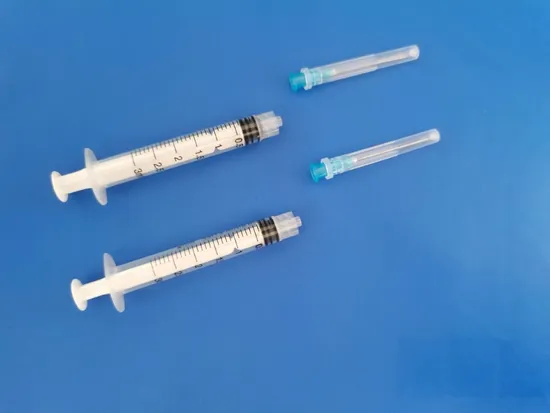
Quick answer. Luer Lock and Luer Slip syringes share the same internal taper, so they are dimensionally interchangeable with most needles and accessories. The difference is the outer collar: Luer Lock adds threads that mechanically lock onto the needle hub, while Luer Slip relies on a press-fit only. Choose Luer Lock for any procedure under pressure, with viscous medications, with extension tubing, or where a disconnection would create a clinical or biohazard risk. Choose Luer Slip for routine subcutaneous and intramuscular injections, mass vaccination, oral dosing, dental, and any case where speed and unit cost matter more than mechanical security.
1. The shared standard: ISO 80369-7 and the 6% Luer taper
Both connectors are governed by the same international standard, ISO 80369-7, which defines small-bore connectors for intravascular and hypodermic applications. The standard specifies a 6% conical taper — the inner cone of every Luer-compatible syringe is mechanically identical, regardless of whether the outer collar is a slip-on or a screw-lock. This is why a Luer Lock syringe and a Luer Slip syringe will both accept the same hypodermic needle hub.
What ISO 80369-7 added in 2016 (and updated in subsequent editions) was a deliberate incompatibility with other small-bore connector families — neuraxial, enteral, respiratory, and limb-cuff — so that a clinician cannot accidentally connect an IV syringe to a feeding tube. If you are sourcing syringes for any regulated market, ISO 80369-7 compliance is a hard requirement you should see written into the spec sheet.
2. The connector difference, explained
Luer Slip
A Luer Slip tip is the original 19th-century Luer design: a smooth conical male tip that press-fits into a matching female socket on the needle or accessory. The seal comes from the friction of the taper itself. Assembly is a single push; disassembly is a single pull. Unit cost is the lowest of any Luer-compatible syringe, and the moulding is the simplest, which is why Luer Slip dominates high-volume disposable manufacturing.
The trade-off is that the joint can pull apart under axial load. With a thin watery medication injected slowly into a relaxed muscle, the friction is more than enough. With a viscous oil-based suspension, an extension line under tension, or a patient who suddenly moves, the joint can separate — sometimes spraying medication or, worse, exposing the clinician to a contaminated needle hub.
Luer Lock
A Luer Lock adds an outer threaded collar around the same inner taper. The matching needle hub or accessory has a corresponding flange that engages the threads with a quarter-turn. Once locked, the joint can withstand many kilograms of axial pull and significantly higher injection pressures than Luer Slip without leaking or separating.
Luer Lock costs 5–15% more per unit at factory gate (the threaded collar is an extra moulding feature). Assembly takes about a second longer and disassembly requires a deliberate twist — generally seen as a safety feature rather than a drawback. Luer Lock syringes from 1ml to 60ml are the default for any clinical area where infusion accessories, extension lines, stopcocks, or pressure-driven injections are used.
3. Side-by-side comparison
The table below summarises the operational differences. Both types are sterilised by EO (ethylene oxide), packed in blister or bulk, and shipped with the same documentation set; the differences are mechanical and clinical, not regulatory.
| Attribute | Luer Slip | Luer Lock |
|---|---|---|
| Connector mechanism | Friction press-fit on 6% taper | Threaded collar + 6% taper |
| Assembly speed | Fastest (single push) | ~1 second slower (quarter turn) |
| Resistance to disconnection | Low — pulls apart under axial load | High — withstands several kg of pull |
| Pressure tolerance | Adequate for thin medications | Required for viscous, oil-based or pressurised injections |
| Typical sizes | 1ml, 2ml, 3ml, 5ml, 10ml | 1ml to 60ml |
| Factory unit cost | Baseline | +5% to +15% |
| Standard reference | ISO 80369-7 | ISO 80369-7 |
| Cross-compatibility | Accepts Luer Lock needles (no thread engagement) | Accepts Luer Slip needles (no lock benefit) |
| Common clinical use | SC/IM injections, vaccination, dental, oral dosing | IV bolus, infusion, oncology, anesthesia, ICU, surgery |
| Typical bulk MOQ (1–10ml) | 100,000–500,000 pcs | 100,000–500,000 pcs |
4. When to specify Luer Lock
Choose Luer Lock when any of the following apply:
- The connection will be under pressure. Contrast injection, viscous antibiotic suspensions, oil-based steroid depot injections, joint infiltrations and any procedure that requires forced injection through a small-gauge needle generates pressure that can pop a Luer Slip joint.
- The joint will be loaded by tubing. Any time the syringe is connected to an extension line, stopcock, T-port, or IV cannula via a flexible tube, the patient's movement or tube weight can pull the joint axially. IV cannulas, scalp vein sets, and infusion components are routinely paired with Luer Lock.
- The medication is hazardous. Cytotoxic chemotherapy, biologics, blood products, and contaminated samples should never travel through a connector that can come apart unintentionally. Most oncology and lab-handling protocols specify Luer Lock by procedure.
- Long-duration administration. Slow IV pushes, syringe-pump infusions, and patient-controlled analgesia (PCA) all run for minutes to hours. Even a 5% chance of disconnection per administration becomes unacceptable across a hospital's annual volume.
- Local protocol or accreditation requires it. JCI, hospital QA programs, and many tender contracts now specify Luer Lock as a default for inpatient wards. Where the rule applies, Luer Slip becomes a clinician compliance risk regardless of cost.
5. When Luer Slip is the right choice
Luer Slip remains the dominant connector globally by volume because it is the right answer for the most common injection procedures:
- Routine subcutaneous and intramuscular injections. Insulin (most insulin pens and syringes are Luer Slip or fixed-needle), vaccines, B12, hormone replacement and similar small-volume injections rarely generate enough pressure or duration to need a lock.
- Mass vaccination programmes. Throughput is the constraint. Auto-disable syringes used in WHO-led campaigns are typically Luer Slip with fixed needles to optimise per-dose speed and unit cost.
- Dental and oral dosing. Cartridge-based dental syringes, oral dosing syringes for paediatric liquid medication, and similar applications are exclusively Luer Slip — the connection is brief and the joint never sees significant force.
- Veterinary and laboratory use. Bench science, animal injection, food-grade dispensing, and many industrial applications use Luer Slip because the saving on unit cost matters more than mechanical security.
- High-frequency disposable use. Where a clinician performs hundreds of injections per shift (clinic vaccination day, blood-drawing station), the sub-second saving of slip-on assembly compounds into meaningful productivity.
6. Bulk procurement economics
If you are buying for a hospital network, distributor, or government tender — not for personal use — the choice has implications beyond the clinical fit.
Per-unit cost
At the factory gate, the cost difference between Luer Lock and Luer Slip is typically 5%–15% on identical capacity and quality. The added moulding for the threaded collar is the only material cost; the rest of the syringe (barrel, plunger, gasket, sterilisation, packaging) is identical.
SKU complexity and inventory
The bigger cost driver is SKU sprawl. If you stock both connector types in 1ml, 2ml, 3ml, 5ml, 10ml, 20ml, 50ml, 60ml capacities, with and without needle, in two needle gauges, you suddenly have 60+ SKUs to manage. Most distributors standardise:
- Luer Lock as the default for clinical hospital lines (1ml–60ml)
- Luer Slip only where a high-volume specialty (vaccination, dental, oral) creates separate demand
- Insulin and vaccine syringes treated as separate product families with their own connector logic
Minimum order quantity (MOQ)
From most Chinese manufacturers, MOQ for either Luer Lock or Luer Slip in 1ml–10ml is 100,000 to 500,000 pieces per SKU per production run; 20ml–60ml typically starts at 50,000–100,000. Mixing connector types in one container is fine but does not reduce per-SKU MOQ. For OEM-printed packaging, expect a one-time tooling fee (~USD 200–500) but no MOQ premium unless you also customise the syringe barrel itself, which usually requires 1,000,000+ pieces.
Lead time and shipping
Lead time is identical: 25–35 days production for either connector type, plus 25–40 days sea freight from Qingdao or Shanghai. There is no production-side advantage to picking one connector over the other on schedule grounds. (For a complete vetting checklist see our companion guide on choosing a disposable syringe manufacturer for bulk import.)
7. Compatibility with needles and IV accessories
Because the inner taper is shared, both syringe types accept the same hypodermic needle hubs. In practice:
- Luer Slip syringe + Luer Slip needle. Standard combination for routine injections. Cheapest. No mechanical lock.
- Luer Slip syringe + Luer Lock needle. Works mechanically — the syringe seats on the inner taper and ignores the threads. You pay for a Luer Lock needle but get no locking benefit.
- Luer Lock syringe + Luer Slip needle. Works mechanically — the needle press-fits into the syringe taper. You lose the locking benefit. Acceptable in a pinch but not recommended for procedures that need the lock.
- Luer Lock syringe + Luer Lock needle. Full mechanical lock. Required for the clinical scenarios listed above.
Other accessories — three-way stopcocks, extension lines, IV catheters, T-connectors, blood transfusion sets — are generally available in both Slip and Lock variants. Match the syringe connector to the dominant accessory in your protocol to avoid creating a weak link in the chain. For IV-line work, that almost always means Luer Lock end-to-end.
8. Industry-specific guidance
Hospitals and ICUs. Default to Luer Lock across the formulary. Carry Luer Slip only in vaccination clinics, dental units, and oral-dose dispensing rooms. Standardise the connector type per ward to prevent accessory-mismatch errors.
Vaccination and EPI programmes. Auto-disable Luer Slip is the default. WHO PQS-listed AD syringes (E08.IT.05) come with a fixed Luer Slip needle and a one-shot reuse-prevention mechanism. Do not switch to Luer Lock here — you will lose the auto-disable function.
Pharmacy compounding. Mostly Luer Lock, because reconstitution often involves higher-pressure draws from multi-dose vials and long sequences of transfers where any disconnect could spoil a sterile preparation.
Veterinary clinics. Mixed. Small animal practice tends to follow human clinical norms (Luer Lock for IV, Slip for SC). Large animal and farm use favours Luer Slip for cost and speed.
Dental clinics. Luer Slip or cartridge syringes — the connector type is rarely a clinical question because the joint is never under sustained load.
Home care and self-administration. Pre-filled syringes in either connector type. The choice is usually made by the pharmaceutical brand, not the patient. Insulin pens are a separate ecosystem with proprietary connectors.
Research and laboratory. Luer Slip dominates for cost. Switch to Luer Lock only where you are running a syringe pump or pressurised injection rig.
9. Bulk import procurement checklist
Whether you settle on Luer Lock, Luer Slip, or a mix of both for your catalog, the same procurement discipline applies. Before placing a production order, confirm with the manufacturer:
- ISO 80369-7 compliance on the connector geometry (request the test report, not just the marketing claim).
- ISO 13485:2016 quality system certificate, with valid expiry date you can verify with the issuing body.
- CE Marking under EU MDR for European destinations; the four-digit notified body number on the certificate must match the body's published scope on NANDO.
- Sterility validation — EO or gamma — with residual ethylene oxide reports, especially for syringes used with paediatric or oncology patients.
- Latex-free and DEHP-free declarations where your end market requires them. Some EU public hospital tenders mandate DEHP-free disposables.
- Country-specific registrations — ANVISA (Brazil), COFEPRIS (Mexico), SFDA (Saudi Arabia), MFDS (Korea) — depending on destination.
- Sample testing before deposit. Pull a draw of 10ml of glycerin through the connector at clinically realistic pressure and confirm there is no leak at the joint.
- OEM artwork lead time, blister film and inner-box plate-making (typically adds 7–10 days on first run only).
Connector selection is one decision in a longer procurement chain. For deeper coverage of the surrounding documentation, see CE vs ISO 13485 vs FDA: the medical device importer's compliance guide.
10. Frequently asked questions
What is the difference between Luer Lock and Luer Slip syringes?
Both use the same 6% Luer taper standardised under ISO 80369-7, so the inner cone geometry is identical. The difference is in the outer collar: Luer Lock adds a threaded collar that screws onto a matching needle hub or accessory, locking the connection mechanically. Luer Slip relies on a friction press-fit only. Luer Lock prevents accidental disconnection under pressure; Luer Slip is faster to assemble and cheaper to manufacture.
When should I use a Luer Lock instead of a Luer Slip syringe?
Use Luer Lock whenever the connection will be under pressure or vibration, when the medication is viscous (oily, suspended), when you are using an extension tube or stopcock that could pull on the joint, when the procedure runs long enough that an unintentional disconnect would expose the patient or clinician to bloodborne pathogens, or when local protocol mandates locked connectors (most ICU, oncology, anesthesia and infusion settings).
Can a Luer Lock syringe accept a Luer Slip needle?
Yes. The inner taper is identical, so a Luer Slip needle will press-fit into a Luer Lock syringe — but you lose the locking benefit and may get fluid leakage at higher injection pressures. The reverse also works: a Luer Slip syringe accepts a Luer Lock needle (the syringe simply ignores the threads). For consistency and safety, hospitals usually standardise on one connector type per ward.
Are Luer Lock syringes more expensive in bulk?
At factory gate, the unit cost difference is small — typically 5%–15% — because the only added material is the threaded collar moulding. The bigger cost driver in bulk procurement is MOQ and SKU complexity: stocking both Luer Lock and Luer Slip in every size doubles your inventory holding cost. Most distributors standardise on Luer Lock for clinical SKUs and keep Luer Slip only for high-volume vaccination, dental and oral-dose lines.
What is the MOQ for Luer Lock and Luer Slip syringes from a Chinese manufacturer?
Standard MOQ for either Luer Lock or Luer Slip in 1ml-10ml sizes is 100,000-500,000 pieces per SKU. 20ml-60ml sizes typically start at 50,000-100,000 pieces. OEM-printed packaging adds a one-time tooling fee but does not raise the per-unit MOQ unless you also customise the syringe barrel itself, which usually requires 1,000,000+ pieces.
Are Luer Lock and Luer Slip syringes both compliant with ISO 80369-7?
Yes. ISO 80369-7 specifies the small-bore intravascular Luer connector geometry. Both Luer Slip (the friction-fit version) and Luer Lock (the threaded version) are defined within the same standard. Compliance with ISO 80369-7 is a hard requirement for sale into the EU under MDR and is referenced by FDA recognized consensus standards in the US.
Which connector type is required for vaccination programs?
Most large-scale vaccination programs (UNICEF, Gavi, country EPI) specify auto-disable (AD) syringes under WHO PQS standard E08.IT.05. AD syringes are typically Luer Slip with a fixed needle. For mass immunisation campaigns where speed and cost-per-dose dominate, Luer Slip is the norm. Luer Lock appears in vaccination only for reconstitution syringes used by pharmacy staff to mix multi-dose vials.
11. Summary and how to request a quote
Luer Lock and Luer Slip are not better-or-worse alternatives — they solve different problems. The decision is driven by clinical pressure, procedure duration, accessory chain, and tender requirements, with bulk economics shaping the SKU mix. As a manufacturer of both Luer Lock syringes (1ml to 60ml) and Luer Slip syringes (1ml to 10ml), plus specialty auto-disable, safety and insulin variants, we ship both connector families to distributors in 50+ countries.
If you are scoping a procurement, send us your target capacity, connector type, needle gauge, sterility method, packaging format and destination market, and we will respond with MOQ, lead time, certification documents and a tiered quote within one working day. Request a quote