
Syringe Sizes and Uses: How to Choose 1 mL to 60 mL
Syringe capacity affects measurable volume, graduation interval, handling and compatibility—but size alone never determines whether a syringe is suitable. This guide compares common 1 mL to 60 mL formats and shows clinicians, distributors and procurement teams which additional specifications must be confirmed.
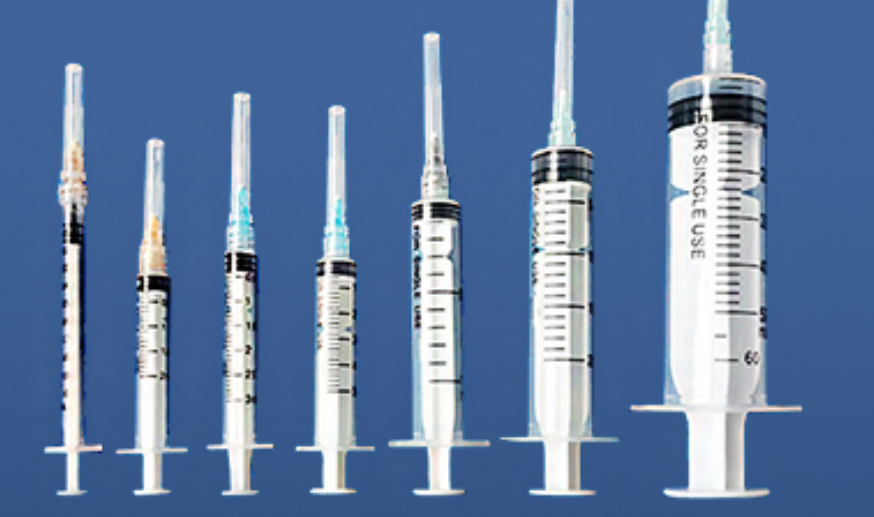
1. Quick answer: which syringe size should you choose?
Choose the smallest syringe that safely holds the complete intended volume and provides the graduation scale required by the validated procedure. Then confirm the application, connector, needle, material, sterility and device compatibility. Capacity is only the first filter.
2. Syringe size and use comparison chart
| Nominal size | Typical workflows | Selection note |
|---|---|---|
| 1 mL | Fine graduations for small measured volumes; specialty versions include tuberculin, vaccine and insulin syringes. | Do not treat every 1 mL syringe as interchangeable: insulin units, vaccine dose, needle and connector requirements differ. |
| 3 mL | General medication preparation and many routine injections; a high-volume hospital and clinic size. | Offers a practical balance between compact handling and enough capacity for common small-volume tasks. |
| 5 mL | Larger medication volumes, reconstitution, aspiration and small-volume flushing or irrigation where protocol permits. | Check whether the procedure needs a needle, Luer connector, catheter tip or oral/enteral tip. |
| 10 mL | Medication preparation, sampling, flushing and controlled fluid transfer. | A larger barrel is not automatically suitable for every line or pump; follow device and facility instructions. |
| 20 mL | Irrigation, aspiration, enteral/oral delivery with the correct connector, and larger-volume transfer. | Not ideal for measuring very small doses because graduation intervals are usually wider. |
| 30 mL | Enteral feeding, irrigation, laboratory and veterinary workflows; availability varies by market. | Specify the connector and graduation scale rather than ordering by capacity alone. |
| 50/60 mL | Enteral feeding, irrigation, aspiration and high-volume manual transfer; validated variants may be used with compatible syringe pumps. | 50 mL and 60 mL are separate nominal capacities. Confirm pump brand compatibility and barrel dimensions before purchase. |
This chart is a product-selection overview, not patient-specific dosing advice. Follow the medicine label, clinician instructions and local protocol.
3. Understanding each common syringe capacity
1 mL
Fine graduations for small measured volumes; specialty versions include tuberculin, vaccine and insulin syringes. Do not treat every 1 mL syringe as interchangeable: insulin units, vaccine dose, needle and connector requirements differ.
3 mL
General medication preparation and many routine injections; a high-volume hospital and clinic size. Offers a practical balance between compact handling and enough capacity for common small-volume tasks.
5 mL
Larger medication volumes, reconstitution, aspiration and small-volume flushing or irrigation where protocol permits. Check whether the procedure needs a needle, Luer connector, catheter tip or oral/enteral tip.
10 mL
Medication preparation, sampling, flushing and controlled fluid transfer. A larger barrel is not automatically suitable for every line or pump; follow device and facility instructions.
20 mL
Irrigation, aspiration, enteral/oral delivery with the correct connector, and larger-volume transfer. Not ideal for measuring very small doses because graduation intervals are usually wider.
30 mL
Enteral feeding, irrigation, laboratory and veterinary workflows; availability varies by market. Specify the connector and graduation scale rather than ordering by capacity alone.
50/60 mL
Enteral feeding, irrigation, aspiration and high-volume manual transfer; validated variants may be used with compatible syringe pumps. 50 mL and 60 mL are separate nominal capacities. Confirm pump brand compatibility and barrel dimensions before purchase.
4. Capacity is not the same as dose accuracy
A syringe's nominal capacity is the maximum marked volume of its barrel. The smallest marked division and permitted tolerances depend on the product design and applicable specification. For small measured volumes, a smaller syringe usually offers a more useful scale, but the final choice must follow the medicine label, device instructions and local clinical protocol.
5. Choose the connector and syringe family
Separate general hypodermic syringes from specialty devices. Standard manual single-use syringes fall within ISO 7886-1; insulin syringes have unit-based scales; vaccine and auto-disable syringes may have fixed-dose features; oral-tip and ENFit enteral syringes are designed to reduce wrong-route connections; and syringe-pump use requires a pump-compatible syringe validated by the equipment manufacturer.
See our Luer Lock, Luer Slip, 1 ml, insulin, oral/enteral syringe range.
6. Bulk procurement specification checklist
- Nominal capacity and graduation interval
- Luer Lock, Luer Slip, eccentric tip, catheter tip, oral tip or ENFit connector
- Two-part or three-part construction and gasket material
- With or without needle; needle gauge, length and attachment
- Sterile or non-sterile supply, sterilization method and shelf life
- Latex-free statement and other market-specific material declarations
- ISO 7886-1 or the applicable specialty standard and market registration
- Primary package, unit box, case quantity, barcode and OEM artwork
- Samples from production tooling for graduation, leakage, plunger movement and connector checks
For supplier qualification, also review our disposable syringe manufacturer checklist; Luer Lock vs Luer Slip guide.
7. Frequently asked questions
What is the most common syringe size?
3 mL and 5 mL are common general-purpose sizes, but demand varies by country, ward and procedure. Procurement should be based on actual usage data, not a universal ratio.
Is a smaller syringe more accurate?
A smaller syringe often has finer graduations for low volumes, but accuracy depends on its design, standard, reading technique and intended use. Use the device and protocol specified for the task.
Are 50 mL and 60 mL syringes the same?
No. They are distinct nominal capacities and may have different barrel dimensions. For syringe pumps, confirm the exact manufacturer and model accepted by the pump library.
Can a hypodermic syringe be used for oral or enteral medication?
Use a purpose-designed oral-tip or enteral syringe when required. Route-specific connectors help reduce misconnections; a Luer syringe should not be substituted where an oral or ENFit device is specified.
Which syringe sizes are available with Luer Lock and Luer Slip?
Both connector families are widely available across common capacities, but the exact range varies. Confirm connector, tip position, needle option and packaging for every SKU.
8. Summary: build a rational syringe size range
A practical distributor range often starts with 1 mL specialty syringes, 3 mL and 5 mL general-purpose formats, 10 mL and 20 mL clinical utility sizes, and 50/60 mL large-volume or specialty formats. The correct mix should come from end-user demand, not a fixed percentage. YINUO supplies Luer Lock, Luer Slip, vaccine, insulin, safety, auto-disable and oral-feeding syringe families with OEM packaging options.
Request a syringe quotation
View the syringe category or send capacities, connectors, needle options, annual quantities, destination market and packaging requirements for a matched quotation.
Request a syringe quotation