
PVC vs Silicone Foley Catheter: When Each Is Appropriate
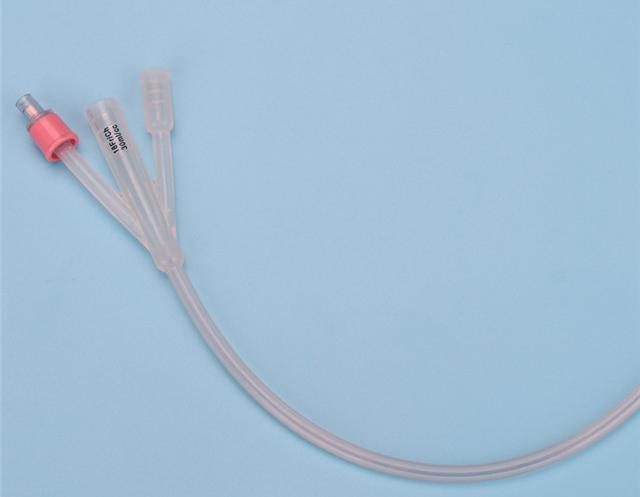
Quick orientation. The Foley urinary catheter is a deceptively complex SKU. The same product family covers a 5× cost range (PVC at the low end, hydrogel-coated silicone at the high end), supports dwell times from days to nearly a month, and comes in three lumen configurations (2-way, 3-way), seven Fr sizes, three balloon volumes and three tip designs. Specifying it correctly for procurement requires understanding the material trade-off — primarily PVC vs silicone — plus the sizing decisions that vary by patient population and clinical setting. This guide walks through material biocompatibility and dwell time, French sizing, balloon volumes, tip designs, 2-way vs 3-way construction, and the procurement specifications that should drive your Foley catheter SKU mix.
1. The three material families
PVC (polyvinyl chloride)
PVC Foley catheters are the lowest-cost option and the volume leader for short-term catheterisation. Medical-grade PVC is plasticised with DEHP or DEHP-free plasticisers (TOTM, DINCH) to achieve the required flexibility. Recommended dwell time: up to 7–14 days. PVC catheters are appropriate for surgical post-operative drainage, short-term acute care, and bladder evacuation procedures. Beyond two weeks, biofilm formation and PVC degradation increase CAUTI (catheter-associated UTI) risk. DEHP-containing PVC catheters are increasingly restricted under EU MDR for paediatric, neonatal, pregnant and breastfeeding patients.
Silicone
100% silicone Foley catheters are the gold standard for long-term indwelling use. Silicone is biocompatible, does not contain plasticisers, has lower biofilm adhesion than PVC, and is resistant to encrustation. Recommended dwell time: up to 28–30 days. Silicone catheters are appropriate for chronic care, home-care patients, palliative care, and any setting where catheter changes are operationally costly or stressful for the patient. The cost premium over PVC is typically 1.5–2× per piece, which often pays back in reduced catheter changes and reduced CAUTI events.
Latex (natural rubber, often coated)
Traditional Foley catheter material — typically natural rubber latex with a silicone or PTFE coating to reduce friction and limit latex contact with mucosa. Recommended dwell time: up to 14–21 days. Latex catheters remain common in many emerging markets but are increasingly restricted in EU and US hospitals due to latex allergy concerns — both Type I (immediate hypersensitivity) and Type IV (delayed contact dermatitis) reactions are documented. Many hospital tenders now require latex-free policies as the default.
Specialty: hydrogel-coated silicone
Higher-end Foley catheters add a hydrogel coating to silicone construction, reducing friction during insertion, lowering biofilm adhesion, and extending comfortable dwell time. Used in difficult catheterisations and where patient comfort is a priority. Cost premium 30–80% over plain silicone.
Our 100% silicone Foley catheters and silicone-coated latex Foley catheters are produced across the full Fr range with 2-way and 3-way variants and standard / Tiemann / Couvelaire tip options, sterile EO-packed.
2. Side-by-side material comparison
| Attribute | PVC | Silicone | Latex (coated) |
|---|---|---|---|
| Recommended dwell | 7–14 days | 28–30 days | 14–21 days |
| Biocompatibility | Acceptable (DEHP plasticiser concern) | Excellent | Latex allergy risk |
| Encrustation resistance | Moderate | High | Moderate (depends on coating) |
| Inner lumen ratio | Standard | Larger (silicone is thinner-walled) | Standard |
| Unit cost (relative) | 1.0× (baseline) | 1.5–2.0× | 1.1–1.3× |
| EU MDR friendly | Restricted for vulnerable populations (DEHP) | Yes | Restricted (latex allergy) |
| Typical use case | Short-term, post-op | Long-term indwelling, chronic | Mid-term, where latex is accepted |
3. French (Fr / Charrière) sizing
The French sizing system measures the outer diameter of the catheter shaft, where 1 Fr = 0.33 mm. Common sizes:
- Fr 6 / Fr 8: paediatric (infants and small children)
- Fr 10 / Fr 12: paediatric and small-frame adults
- Fr 14: adult standard for routine catheterisation
- Fr 16: adult, when more drainage is needed
- Fr 18: adult, post-operative or haematuria management
- Fr 20 / Fr 22 / Fr 24: post-prostatectomy, urological surgery, severe haematuria
- Fr 26 / Fr 28 / Fr 30: specialty urological procedures, large-bore irrigation
For routine inpatient procurement, Fr 14, 16 and 18 typically constitute 80%+ of consumption. Paediatric units stock heavily Fr 6–10. Urology and post-surgical wards stock Fr 20+ for specific procedures.
4. Balloon volumes (5 ml / 10 ml / 30 ml)
The Foley retention balloon is inflated with sterile water (not saline — saline can crystallise and prevent balloon deflation). Standard balloon volumes:
- 5 ml: paediatric and some small-frame adult catheters; smaller balloon means less bladder neck irritation
- 10 ml: adult standard; the volume-leader balloon size for routine indwelling drainage
- 30 ml: post-prostatectomy haemostasis or special applications; larger balloon applies pressure to the prostatic bed for bleeding control
Always inflate to the volume specified on the catheter, using sterile water from the pre-filled syringe or sterile vial. Over-inflating beyond stated capacity risks balloon rupture; under-inflating risks catheter migration with leakage and bladder injury.
5. Tip designs
- Standard (round) tip: the default design with two opposed drainage eyes near the tip. Used for routine catheterisation in 80%+ of cases.
- Tiemann (curved / coudé) tip: the tip is angled 30° to navigate around an enlarged prostate or urethral stricture in male patients. Marked with an indicator on the proximal end so the clinician can keep the tip oriented anteriorly during insertion.
- Couvelaire tip: open distal end with multiple drainage eyes, designed to allow blood clots and tissue debris to pass through during haematuria or post-urological-surgery drainage. Often paired with 3-way construction.
- Whistle tip: angled tip with single distal eye, less common, used for specific urological procedures.
- Mercier (double-curve): two opposing curves to navigate complex anatomy, specialty use.
For routine procurement, standard-tip catheters dominate. Tiemann tips are stocked in lower volume in male-heavy wards or urology departments. Couvelaire and other specialty tips are SKU as needed.
6. 2-way vs 3-way construction
2-way Foley catheters have two channels: one for urinary drainage and one for inflating the retention balloon. This is the standard for routine indwelling drainage and accounts for the vast majority of Foley catheter consumption.
3-way Foley catheters add a third channel for continuous bladder irrigation (CBI). 3-way catheters are wider — typically Fr 18, 20, 22 or 24 — to accommodate the third lumen and the higher flow during irrigation. Used after transurethral resection of the prostate (TURP), severe haematuria management, and clot evacuation. Available in PVC and silicone, in standard and Couvelaire tip designs.
Procurement note: 3-way catheters carry their own SKU MOQ and are stocked separately from 2-way SKUs. Confirm with your urology and post-surgical wards what 3-way volume is needed; over-stocking 3-way creates carrying cost without clinical use, but stockouts halt urgent post-TURP cases.
7. CAUTI prevention and dwell-time policy
Catheter-associated urinary tract infection (CAUTI) is one of the most common healthcare-associated infections globally. Risk increases with dwell time, regardless of material:
- Day 1: ~3–10% risk
- Day 7: increases substantially
- Day 14+: cumulative risk approaches certainty without aseptic management
Clinical guidelines (CDC HICPAC, NICE, WHO) emphasise shortest necessary duration as the primary CAUTI mitigation. Material choice contributes — silicone has lower biofilm adhesion than PVC — but does not substitute for prompt removal when catheterisation is no longer indicated. Hospital procurement policies increasingly mandate silicone for any anticipated dwell beyond 7 days.
8. Bulk procurement specifications
SKU mix recommendations
A typical adult inpatient hospital stocks the following Foley catheter mix (approximate share by material and Fr):
- PVC 2-way Fr 14, 16, 18 with 10ml balloon, standard tip — 60–70% of volume
- Silicone 2-way Fr 14, 16, 18 with 10ml balloon, standard tip — 20–30%
- 3-way Fr 18, 20, 22 PVC and silicone — 5–10%
- Paediatric Fr 6, 8, 10 silicone with 5ml balloon — 2–5%
- Tiemann tip Fr 14, 16, 18 — 1–3%
- Couvelaire and other specialty tips — <1%
Adjust by patient population — long-term care and home-care channels weight heavily toward silicone; acute surgical wards weight toward PVC.
Unit cost ranges (FOB China)
- PVC 2-way Foley catheter: USD 0.30–0.80 per piece
- 100% silicone 2-way: USD 0.60–1.50 per piece
- Silicone-coated latex 2-way: USD 0.40–1.00 per piece
- 3-way variants: 1.5–2× the equivalent 2-way unit cost
- Specialty tip (Tiemann, Couvelaire): +USD 0.10–0.20 per piece
- Hydrogel-coated silicone: +USD 0.30–0.80 per piece
MOQ and lead time
Typical MOQ is 5,000–10,000 pieces per Fr size per material per production run for the volume-leading sizes (Fr 14, 16, 18). Specialty sizes (Fr 6, Fr 22+) and tip designs (Tiemann, Couvelaire) typically require smaller minimum batches but have longer lead times. Lead time 25–35 days production plus 7–10 days for EO sterilisation cycle if applicable. Sterile EO-packed in individual peel-pouches with sterilisation indicator; 50–100 per inner box, 200–500 per master carton. Shelf life 3–5 years from manufacturing date depending on material and sterilisation method.
9. Common procurement pitfalls
- Underspecifying material. "Foley catheter Fr 16 10ml" doesn't specify PVC, silicone or latex. Suppliers will quote whichever has lowest unit cost (usually PVC); if your dwell-time policy requires silicone, your bid will look uncompetitive without explicit specification.
- Mixing 2-way and 3-way in the same line item. The two are different SKUs with different costs and clinical uses. Specify them separately.
- Stocking too many specialty tips. Tiemann tips have specific clinical indications; over-stocking creates inventory carrying cost. Stock per actual ward demand, not per "completeness".
- Latex without disclosure. Latex Foleys must be clearly labelled "contains natural rubber latex" under FDA and EU rules. Specifying latex-free in tender language is becoming the default.
- Skipping the silicone premium. For long-term care or home-care channels, the silicone premium pays back through reduced catheter changes and reduced CAUTI events. Run the cost-of-care math, not just the unit-cost comparison.
- Saline inflation. Clinicians sometimes use saline for balloon inflation when sterile water isn't immediately available. Saline can crystallise and prevent deflation, requiring complex retrieval. Train staff and stock sterile-water syringes alongside catheters.
10. Frequently asked questions
What is the difference between PVC, silicone and latex Foley catheters?
PVC Foley catheters are the lowest-cost option and are used for short-term catheterisation (typically up to 7–14 days). Silicone catheters have superior biocompatibility, do not contain plasticisers, and are recommended for long-term indwelling use up to 28–30 days. Latex catheters (often coated with silicone or PTFE) are traditional and still common in some markets but are increasingly restricted due to latex-allergy concerns. The choice depends on intended dwell time, patient sensitivity, and local hospital policy.
What does Fr (French) sizing mean for Foley catheters?
The French sizing system (Fr or Ch / Charrière) measures the outer diameter of the catheter shaft. 1 Fr = 0.33 mm. So Fr 16 = 5.3 mm outer diameter, Fr 18 = 6.0 mm. Common sizes range from Fr 6 (paediatric) to Fr 30 (urology procedures). Adult standard sizes are Fr 14, 16 and 18; Fr 14 is the default for routine adult catheterisation, Fr 16 is used when more drainage is needed, and Fr 18+ for haematuria or post-operative use where clots may need to drain.
What are 2-way and 3-way Foley catheters?
A 2-way Foley catheter has two channels: one for urinary drainage and one for inflating the retention balloon. This is the standard catheter for routine indwelling drainage. A 3-way catheter adds a third channel for continuous bladder irrigation, used after urological surgery (e.g. transurethral resection of the prostate) or for managing severe haematuria with clot risk. 3-way catheters are wider (typically Fr 18–24) to accommodate the extra lumen and the higher flow during irrigation.
What balloon volumes are available for Foley catheters?
The most common Foley catheter balloon volumes are 5 ml (paediatric and some adult), 10 ml (adult standard), and 30 ml (post-prostatectomy haemostasis or special applications). Inflate to the volume specified on the catheter using sterile water, not saline. Saline can crystallise and prevent balloon deflation. Over-inflating beyond the stated capacity risks balloon rupture and possible mucosal damage; under-inflating risks catheter migration.
What tip designs are available for Foley catheters?
Standard (round) tip is the default for routine catheterisation. Tiemann (curved/coudé) tip is angled to navigate around an enlarged prostate or stricture in male patients. Couvelaire tip has open distal eyes and is used for haematuria or post-surgical drainage where clots need to pass. Specialty tips are typically a separate SKU with smaller MOQ; routine procurement should be heavily weighted toward standard-tip catheters with smaller volumes of Tiemann for difficult catheterisation.
How long can a Foley catheter remain indwelling?
Recommended maximum dwell time depends on material: PVC catheters are typically removed within 7–14 days; latex catheters within 14–21 days; silicone catheters can remain up to 28–30 days. Hydrogel-coated silicone catheters may extend to similar duration with reduced biofilm formation. Catheter-associated urinary tract infection (CAUTI) risk increases with dwell time, and clinical guidelines emphasise the shortest necessary duration regardless of material.
What is the typical MOQ for Foley catheters from a Chinese manufacturer?
Typical MOQ for non-customised Foley catheters is 5,000–10,000 pieces per Fr size per production run. Larger runs apply for the volume-leading sizes (Fr 14, 16, 18); specialty sizes (Fr 6, Fr 22+) and tip designs (Tiemann, Couvelaire) typically run smaller minimum batches. Silicone catheters carry roughly 1.5–2× the unit cost of PVC catheters. We carry both PVC and 100% silicone Foley catheters across the full Fr 6–30 range, in 2-way and 3-way variants.
11. Summary and how to request a quote
Foley catheter selection is a multi-axis specification problem: material (PVC / silicone / latex), French size, balloon volume, tip design, lumen count (2-way / 3-way), sterilisation, and packaging. The right SKU mix changes by patient population — long-term care weights silicone, surgical wards weight PVC, urology weights 3-way and specialty tips. For most hospitals the 80/20 SKU set is PVC and silicone 2-way Fr 14/16/18 with 10ml balloon and standard tip; everything else is targeted specialty stock.
As a manufacturer of 100% silicone Foley catheters and silicone-coated latex Foley catheters across the full Fr 6–30 range, plus the broader catheter and tube family — feeding tubes, stomach / nasogastric tubes, suction catheters — we ship to hospital networks and distributors in 50+ countries. Send us your material preference, Fr mix, balloon volume, tip design, 2-way / 3-way mix, target quantity and destination market, and we will respond within one working day with applicable certifications, MOQ, lead time and a tiered quote. Request a quote