
Oxygen Mask Types Compared: Nasal Cannula, Simple Mask, Venturi & Non-Rebreather
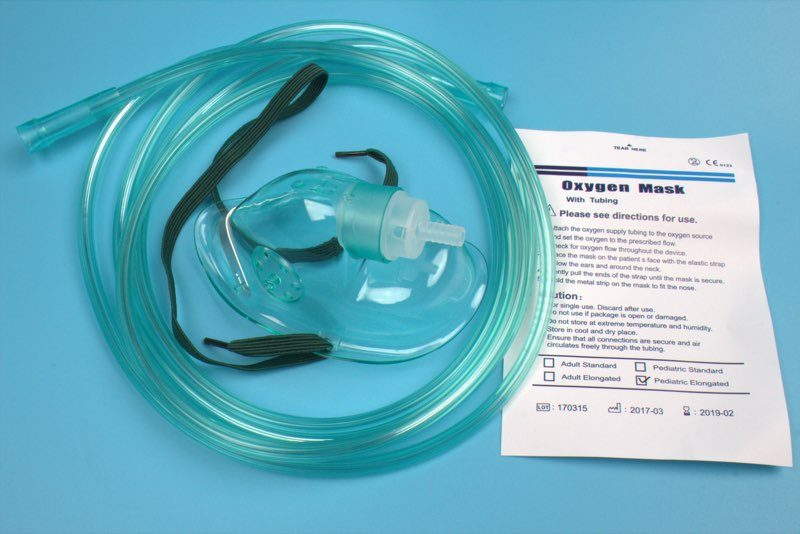
Quick orientation. Supplemental oxygen is the most prescribed therapy in any hospital, yet the device choice is more consequential than it looks. A nasal cannula and a non-rebreather mask both deliver "oxygen", but they sit at opposite ends of the FiO₂ spectrum (24% vs 90%) and produce very different clinical outcomes in the wrong patient. This guide compares the five most common oxygen delivery devices — nasal cannula, simple oxygen mask, Venturi mask, non-rebreather mask with reservoir bag, and nebulizer mask — by FiO₂ range, flow rate, indication, CO₂ retention risk and procurement specifications, so your SKU mix matches your wards.
1. Why FiO₂ depends on more than oxygen flow
The fraction of inspired oxygen (FiO₂) actually reaching the patient's alveoli is a function of three variables: the oxygen flow rate set on the flowmeter, the patient's minute ventilation (which dilutes the delivered oxygen with room air), and the device's geometry (whether it traps oxygen in a reservoir, entrains a fixed ratio of room air, or simply pools oxygen near the airway).
This is why a tachypnoeic patient on 4 L/min nasal cannula gets a much lower real FiO₂ than a calm patient at the same flow — the high minute ventilation pulls extra room air past the cannula, diluting the oxygen. It is also why a Venturi mask is the only "low-flow" device that delivers a predictable FiO₂: the air-entrainment jet draws a fixed ratio of room air for every litre of oxygen, regardless of patient effort.
Three device categories follow from this physics:
- Low-flow / variable-FiO₂ — nasal cannula, simple oxygen mask. FiO₂ varies with patient breathing.
- Fixed-FiO₂ (air-entrainment) — Venturi mask. FiO₂ is precise but capped at ~50%.
- High-flow / high-FiO₂ (reservoir) — non-rebreather mask with reservoir bag. FiO₂ up to 90%.
The nebulizer mask is a fourth category — it delivers oxygen plus an aerosolised medication, and is not used for oxygenation as a primary indication.
2. Comparison at a glance
| Device | O₂ flow | FiO₂ delivered | Precision | Primary use |
|---|---|---|---|---|
| Nasal cannula | 1–6 L/min | 24–40% | Variable | Long-term mild hypoxia, comfort |
| Simple oxygen mask | 5–10 L/min | 40–60% | Variable | Moderate hypoxia, post-op |
| Venturi mask | 2–15 L/min (per diluter) | 24, 28, 31, 35, 40, 50% | Precise | COPD, titrated FiO₂ |
| Non-rebreather (reservoir) | 10–15 L/min | 60–90% | High but variable | Severe hypoxia, pre-oxygenation |
| Nebulizer mask | 6–10 L/min | ~30–40% (incidental) | Variable | Aerosol drug delivery |
3. Nasal cannula — low-flow, high-comfort
The nasal oxygen cannula is the workhorse for any patient who needs supplemental oxygen for hours or days and is otherwise stable. The soft prongs deliver oxygen into the nares; the patient continues to breathe normally and can eat, speak, drink and cough without interruption. FiO₂ rises roughly 4% per L/min above room air, giving an approximate range of:
- 1 L/min ≈ 24% FiO₂
- 2 L/min ≈ 28%
- 3 L/min ≈ 32%
- 4 L/min ≈ 36%
- 5 L/min ≈ 40%
- 6 L/min ≈ 44% (upper limit for standard cannulas)
Indicated for: chronic hypoxaemia (COPD, interstitial lung disease, heart failure), post-operative oxygen weaning, palliative care, paediatric mild hypoxia. Avoid: severe hypoxia where FiO₂ >40% is required; mouth-breathing patients (delivered FiO₂ falls dramatically); patients with obstructed nares.
Sizing: neonatal, infant, paediatric, adult — the prong outer diameter and tubing inner diameter scale with size. Running adult cannulas on neonates causes nasal trauma; running paediatric on adults under-delivers oxygen.
Procurement note: do not exceed 6 L/min on a standard cannula. For higher flow needs (acute respiratory failure bridging to non-invasive ventilation, post-extubation support), use high-flow nasal oxygen (HFNO) cannulas with active humidification — a different SKU.
4. Simple oxygen mask — moderate FiO₂, the everyday workhorse
The simple oxygen mask covers the nose and mouth, delivering oxygen at 5–10 L/min and reaching FiO₂ 40–60% depending on patient minute ventilation. Side ports vent exhaled CO₂ to room air. Flow below 5 L/min risks CO₂ rebreathing within the mask; flow above 10 L/min provides no further FiO₂ benefit (and wastes oxygen).
Indicated for: post-operative oxygen, moderate hypoxia, mild-to-moderate respiratory distress, mouth-breathing patients who fail to oxygenate on cannula. Avoid: COPD patients at risk of hypercapnia (use a Venturi instead for precise FiO₂ control); patients needing FiO₂ >60% (use non-rebreather).
Sizing: adult, paediatric, infant. The mask must seal against the bridge of the nose and chin without pressing on the eyes. An oversized mask leaks room air and drops the delivered FiO₂. Aluminium nose-clip strips inside the mask shell allow bend-to-fit nose bridge sealing.
5. Venturi mask — the precision tool for titrated oxygen
The Venturi mask uses the Bernoulli air-entrainment principle: oxygen flows through a narrow jet, drawing a fixed ratio of room air past the jet and into the mask. The ratio is set by the diluter — a colour-coded plastic plug that screws onto the bottom of the mask, or a rotating dial on adjustable models. Each diluter is printed with its FiO₂ and the minimum oxygen flow required to deliver that FiO₂.
Standard FiO₂ settings and typical minimum flow:
- 24% FiO₂ — blue diluter — 2 L/min minimum flow
- 28% FiO₂ — yellow / white — 4 L/min
- 31% FiO₂ — white — 6 L/min
- 35% FiO₂ — green — 8 L/min
- 40% FiO₂ — pink / red — 8–12 L/min
- 50% FiO₂ — orange — 12–15 L/min
(Diluter colour conventions vary slightly by manufacturer; check the printed label, not just the colour.)
Indicated for: COPD or other chronic respiratory failure where over-oxygenation risks hypercapnia (CO₂ retention); patients where the prescribing physician has ordered a specific FiO₂; patients where titration up or down by exact 4–6% increments is the clinical plan.
Avoid: severe hypoxia requiring FiO₂ >50% — Venturi cannot exceed 50%, use non-rebreather. The Venturi mask is the only single device that gives a known, repeatable FiO₂; non-rebreather and simple masks vary too much with patient effort to be considered "precise".
Sizing: adult and paediatric, both with the same diluter set.
6. Non-rebreather mask with reservoir bag — high-FiO₂ for emergencies
The non-rebreather mask with reservoir bag is the highest-FiO₂ delivery device short of intubation. A 1-litre reservoir bag connects to the mask via a one-way valve; the patient inhales near-100% oxygen from the bag, and exhales through side-port one-way valves that prevent room air entrainment and CO₂ rebreathing. At 10–15 L/min oxygen flow, achievable FiO₂ is typically 60–90%.
Critical setup: pre-inflate the reservoir bag by occluding the inlet valve until the bag fills, then apply the mask. The bag must never fully collapse on inspiration — if it does, oxygen flow is too low for that patient's minute ventilation and FiO₂ is dropping dramatically. Increase flow until the bag remains at least half full at end-inspiration.
Indicated for: severe hypoxia (SpO₂ <90% on simple mask), trauma, carbon monoxide poisoning (high-FiO₂ accelerates COHb clearance), acute severe asthma pre-intubation, acute pulmonary oedema, pre-oxygenation before rapid sequence intubation, anaphylaxis with respiratory compromise.
Avoid: stable patients on long-term oxygen — too much flow, too uncomfortable, wastes oxygen. Never use as a first-line device for COPD patients at risk of hypercapnic respiratory failure without arterial blood gas monitoring.
Variants: partial-rebreather masks (no one-way valve on the bag, lower max FiO₂ around 60%) and full non-rebreather (one-way valve, higher FiO₂). Specify the variant when ordering.
7. Nebulizer mask — aerosol drug delivery, not primary oxygenation
The nebulizer mask is shaped like a simple oxygen mask but is paired with a jet nebulizer reservoir that aerosolises a liquid drug (salbutamol, ipratropium, hypertonic saline, budesonide, etc.) into a respirable mist. Oxygen at 6–10 L/min drives the nebulizer; FiO₂ at the patient is incidental (~30–40%).
Indicated for: bronchodilator delivery in asthma, COPD exacerbation, paediatric viral bronchiolitis; mucolytic delivery; nebulised antibiotic delivery in cystic fibrosis and ventilator-associated pneumonia.
Procurement note: the nebulizer mask and the nebulizer kit (mask + jet nebulizer + tubing + T-piece) are sold as separate SKUs. Hospital pharmacies typically prefer the complete kit for ward-level convenience. Adult and paediatric sizing both essential — paediatric mask must seal without compressing the eyes.
Not for: oxygen therapy as the primary indication. If oxygen is the goal, use one of the four devices above; the nebulizer mask just happens to also deliver oxygen because oxygen is the propellant gas.
8. Choosing the right device by clinical scenario
- Mild chronic hypoxia (SpO₂ 88–92% on room air) — nasal cannula 1–4 L/min
- Post-operative oxygen, alert patient — nasal cannula 2–4 L/min
- Post-operative oxygen, sedated patient — simple mask 5–8 L/min
- COPD exacerbation, risk of CO₂ retention — Venturi 24–28%, titrated to SpO₂ target 88–92%
- Pneumonia with moderate hypoxia — simple mask 6–10 L/min, escalate if SpO₂ <92%
- Pulmonary oedema, acute — non-rebreather 15 L/min while preparing CPAP / NIV
- Major trauma, head injury, severe shock — non-rebreather 15 L/min as initial oxygen
- Carbon monoxide poisoning — non-rebreather 15 L/min, consider hyperbaric referral
- Acute severe asthma, COPD with severe wheeze — nebulizer mask with bronchodilator, escalate oxygen via separate cannula or non-rebreather if hypoxic
- Paediatric viral bronchiolitis with wheeze — nebulizer mask, paediatric size
- Pre-oxygenation before intubation — non-rebreather 15 L/min for 3 minutes, or bag-mask if patient cannot tolerate
9. Procurement specifications
SKU mix recommendations
For a typical mixed adult inpatient hospital, oxygen device consumption breaks down roughly:
- Nasal cannula — 50–60% of all oxygen devices used (highest by volume)
- Simple mask — 20–25%
- Non-rebreather — 8–12% (ED, ICU, recovery, code response)
- Venturi mask — 5–10% (mostly respiratory, COPD wards)
- Nebulizer mask — 10–15% (dual-use: drug delivery, not pure oxygen — counted separately by pharmacy)
Paediatric units invert toward nasal cannula and nebulizer mask. ICUs weight heavily toward non-rebreather (initial resuscitation) and Venturi (titrated ventilation weaning). Confirm hospital-specific consumption from your prior six months of usage before placing an initial order.
Material and configuration options
- Mask body: medical-grade PVC, soft TPE or silicone cushion at face contact
- Tubing: PVC standard or kink-resistant (helical reinforcement); 2.1 m (7 ft) standard or 4.2 m (14 ft) extended
- DEHP-free: available across all device types for neonatal, paediatric and DEHP-restricted markets
- Sterile: EO-sterilised packaging for OR, ICU, and emergency department use; non-sterile packaging acceptable for ward-level use
- Sizing: adult, paediatric, infant; nasal cannula additionally in neonatal
- OEM packaging: private label and multilingual labelling (English, Spanish, French, Arabic, Russian, Portuguese) supported
Unit cost ranges (FOB China)
- Nasal oxygen cannula: USD 0.10–0.30 per piece
- Simple oxygen mask: USD 0.25–0.55
- Venturi mask (with full diluter set): USD 0.50–1.20
- Non-rebreather mask with reservoir bag: USD 0.60–1.40
- Nebulizer mask kit (mask + nebulizer jar + tubing): USD 0.45–0.95
Cost ranges depend on material (PVC vs DEHP-free), sterilisation, tubing length and packaging. OEM and multilingual labelling add a one-time tooling fee but typically no per-unit premium at volume.
MOQ and lead time
Typical MOQ is 5,000–20,000 pieces per SKU (size and type) per production run, scaling down to 3,000 for low-volume specialty SKUs and up to 50,000+ for OEM-printed packaging on a single run. Lead time 25–35 days for standard SKUs, 35–50 days for OEM packaging. Standard packaging: individually polybag-sealed mask with attached tubing, 50 per inner carton, 200–400 per master carton; cannulas pack denser at 100 per inner, 500–1000 per master. Shelf life 36 months from manufacturing date for non-sterile, 24 months for EO-sterilised.
10. Common procurement pitfalls
- Ordering only adult sizes. Paediatric and infant masks are non-substitutable. If your customer has any paediatric volume, paediatric SKUs are mandatory.
- Skipping the Venturi diluter set. Venturi masks ship with the full FiO₂ diluter set as standard; some discount vendors ship only one or two diluters to reduce per-unit cost. Specify "full diluter set, all FiO₂" in your spec.
- Confusing non-rebreather with partial-rebreather. The partial-rebreather lacks the one-way valve on the bag and delivers ~60% FiO₂ maximum. Non-rebreather has the valve and reaches 90%. Customs and clinical accidents both stem from receiving the wrong variant.
- Under-specifying tubing length. 2.1 m (7 ft) is standard; 4.2 m (14 ft) is extended for radiology, MRI, transport. ICU patients on extended tubing get less FiO₂ at the mask if oxygen flow is set as for standard tubing — clinicians must understand this, and procurement should buy the right length for the setting.
- Mixing DEHP and DEHP-free in the same paediatric ward. Once you commit to DEHP-free for paediatrics, all SKUs in that ward must be DEHP-free; partial conversion is meaningless from a regulatory and clinical safety standpoint.
- Buying sterile when non-sterile is acceptable. Sterile packaging adds cost. Non-sterile is acceptable for any ward-level oxygen device (the device is not used in sterile-field procedures). Reserve sterile EO-packed for OR, sterile suites and immune-compromised patient cohorts.
11. Frequently asked questions
What is the difference between a nasal cannula and an oxygen mask?
A nasal cannula delivers low-flow oxygen (1–6 L/min) into the nares and achieves an inspired oxygen concentration (FiO₂) of roughly 24–40%, depending on the patient's minute ventilation. A simple oxygen mask covers the nose and mouth, runs at 5–10 L/min and reaches FiO₂ 40–60%. Cannulas are more comfortable and allow eating and speaking; masks deliver higher concentrations but are less tolerated for long use. The choice depends on target FiO₂, patient comfort, anticipated duration and whether precise oxygen titration is required.
What FiO₂ does a Venturi mask deliver?
A Venturi (air-entrainment) mask delivers a precise, fixed FiO₂ selected by changing the colour-coded diluter or rotating the mask collar. Standard FiO₂ settings are 24%, 28%, 31%, 35%, 40% and 50%. Each setting requires a specific minimum oxygen flow rate (typically 2–15 L/min) printed on the diluter. Because the device delivers a known FiO₂ regardless of the patient's breathing pattern, Venturi masks are the device of choice for titrated oxygen in COPD and other patients where over-oxygenation risks hypercapnic respiratory failure.
When should I use a non-rebreather mask?
A non-rebreather mask with reservoir bag is the highest-FiO₂ device short of mechanical ventilation, delivering 60–90% FiO₂ at 10–15 L/min oxygen flow. It is indicated for severe hypoxia — major trauma, carbon monoxide poisoning, acute pulmonary oedema, acute severe asthma, status epilepticus pre-intubation, and pre-oxygenation before airway interventions. The reservoir bag must be inflated before applying the mask and must never collapse on inspiration; if it does, the oxygen flow is too low for that patient's minute ventilation.
Can a nasal cannula deliver more than 6 L/min?
Standard nasal cannulas should not be run above 6 L/min — higher flow causes mucosal drying, patient discomfort and inconsistent FiO₂. For higher flow needs, switch to a simple mask (5–10 L/min), Venturi mask (titrated FiO₂), non-rebreather mask (high FiO₂), or high-flow nasal oxygen (HFNO) systems that humidify and warm the gas and can run 30–60 L/min. HFNO requires a dedicated humidifier and HFNO-specific cannula, sold separately from standard nasal oxygen cannulas.
Are paediatric oxygen masks just smaller adult masks?
Paediatric oxygen masks are sized to fit the smaller face geometry of children — typically infant, paediatric and adult sizes. The mask must seal against the bridge of the nose and chin without compressing the eyes; an oversized mask leaks room air and lowers achieved FiO₂. Nasal cannulas come in neonatal, infant, paediatric and adult sizes with appropriately scaled nasal prongs and tubing diameter. Procurement must include paediatric SKUs as a distinct line item — running adult masks on children is unsafe and wasteful.
What materials are oxygen masks and cannulas typically made from?
Oxygen masks are typically made from medical-grade PVC with a soft elastomer (TPE or silicone) cushion or rim where the mask contacts the face. Tubing is medical-grade PVC, available in standard or kink-resistant (helically reinforced) construction, typically 2.1 m (7 ft) standard or 4.2 m (14 ft) extended length. Nasal cannulas use soft PVC or silicone prongs for patient comfort. DEHP-free versions are available across all device types for neonatal and paediatric procurement and for markets with DEHP restrictions.
What is the typical MOQ and packaging for oxygen masks from a Chinese manufacturer?
Typical MOQ is 5,000–20,000 pieces per SKU (size and type) per production run. Standard packaging is individually polybag-sealed mask with tubing attached, 50 pieces per inner carton, 200–400 pieces per master carton; nasal cannulas pack denser at 100 pieces per inner carton, 500–1000 per master carton. Sterile EO-packed versions are available at a small price premium for OR and ICU use. Lead time 25–35 days for standard SKUs, longer for OEM packaging or non-standard tubing length. We carry the full nasal cannula, simple mask, Venturi mask, non-rebreather mask and nebulizer mask range with adult and paediatric sizing.
12. Summary and how to request a quote
Choosing the right oxygen delivery device is a clinical decision driven by target FiO₂, expected duration, patient tolerance and the risk profile (CO₂ retention in COPD, severe hypoxia in trauma). At the procurement layer, the consequence is SKU mix: a hospital that buys mostly nasal cannulas with a small reserve of non-rebreathers handles 80% of oxygen needs, but a COPD-heavy ward without Venturi inventory cannot deliver titrated oxygen safely.
As a manufacturer of the full oxygen therapy range — nasal oxygen cannulas, simple oxygen masks, Venturi masks with full diluter set, non-rebreather masks with reservoir bag, nebulizer masks and complete nebulizer kits — plus the wider breathing & anesthesia family (breathing circuits, manual resuscitators, endotracheal tubes, laryngeal mask airways, tracheostomy tubes, Guedel airways), we ship to hospital networks and distributors in 50+ countries. Send us your SKU mix (device type, size, DEHP / DEHP-free, sterile / non-sterile, tubing length), target quantity and destination market, and we will respond within one working day with applicable certifications (CE, ISO 13485), MOQ, lead time and a tiered quote. Request a quote