
Disposable vs Reusable Surgical Gowns: TCO Analysis for Hospitals
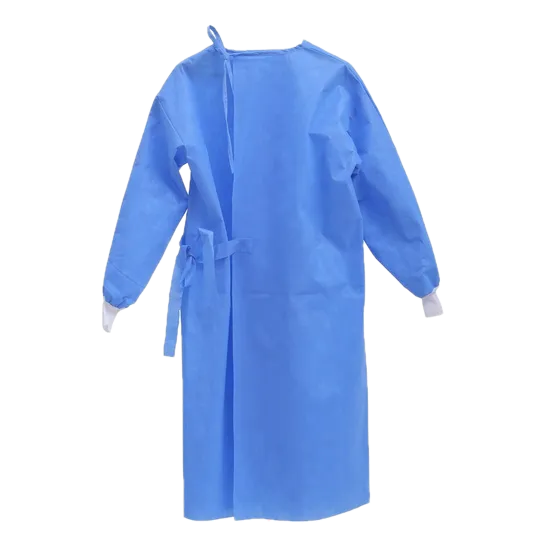
Quick orientation. The choice between disposable and reusable surgical gowns is rarely about which is "better" — both can deliver AAMI PB70 Level 4 barrier performance when correctly specified. The choice is a total cost of ownership (TCO) question shaped by laundering economics, infection-control consistency, inventory turnover and increasingly, the hospital's carbon footprint targets. This guide walks through the AAMI PB70 standard, the dominant disposable and reusable material families, the per-use cost arithmetic that should drive your gown SKU mix, and the procurement realities for bulk import.
1. The AAMI PB70 standard: the four barrier levels
All clinical gown procurement in regulated markets references ANSI/AAMI PB70, the standard for liquid barrier performance and classification of protective apparel and drapes. PB70 (current revision 2022) defines four levels based on impact and hydrostatic pressure tests on the critical zones (chest and forearms):
| Level | Barrier | Test methods | Typical clinical use |
|---|---|---|---|
| Level 1 | Minimal | AATCC 42 (impact penetration ≤4.5g) | Basic care, visitor isolation |
| Level 2 | Low | AATCC 42 + 127 (hydrostatic ≥20 cm) | Venipuncture, suturing in ICU |
| Level 3 | Moderate | AATCC 42 + 127 (hydrostatic ≥50 cm) | ER trauma, arterial blood draw |
| Level 4 | High | ASTM F1671 (viral penetration) | Surgery, pathogen isolation |
Level 4 is the only PB70 level that includes viral penetration testing (ASTM F1671 using bacteriophage Phi-X174 as a surrogate for blood-borne pathogens). For surgical theatres handling infectious patients or AGPs, Level 4 is the procurement default. For routine operating-room use without high pathogen exposure, Level 3 is widely accepted. Levels 1-2 cover non-surgical isolation and care use cases.
Outside the US, EN 13795 ("Surgical drapes, gowns and clean air suits") is the European parallel standard, with "Standard Performance" and "High Performance" categories that approximately map to PB70 Levels 2-3 and Level 4 respectively. CE-marked surgical gowns must comply with EN 13795 in addition to PB70 where targeting EU markets.
2. Disposable gown material families
Disposable surgical gowns are made from non-woven polypropylene fabrics. The dominant material families:
SMS (Spunbond-Meltblown-Spunbond)
The volume-leading material for disposable surgical and isolation gowns. Three layers: spunbond polypropylene (strength), meltblown polypropylene (barrier and filtration), spunbond polypropylene (durability). Available in 35–65 g/m² basis weight. Soft, breathable, fluid-resistant. Suitable for AAMI Level 1-3.
SMMS (Spunbond-Meltblown-Meltblown-Spunbond)
Adds a second meltblown layer for higher barrier performance at moderate weight. Suitable for AAMI Level 3 routinely and Level 4 with reinforced critical zones.
PE-laminated SMS or spunlace
Critical zones (chest and forearms) reinforced with a polyethylene film laminate for AAMI Level 4 viral barrier compliance. Heavier and warmer than plain SMS but required for blood-borne pathogen exposure.
Spunlace (hydroentangled)
Cellulose / polyester blend hydroentangled into a soft, cloth-like fabric. More comfortable than SMS but lower fluid resistance unless laminated. Often used for visitor or non-surgical isolation gowns where comfort outweighs high barrier performance.
SMS + secondary breathable film
Premium Level 4 construction combining SMS body fabric with a microporous breathable film at critical zones. Higher cost, used in cardiothoracic and other high-fluid-volume surgical specialties.
Our disposable surgical gowns are produced in SMS 35-65 g/m² and SMMS 45-65 g/m², with PE-reinforced critical zones available for AAMI Level 4 / EN 13795 High Performance, sterile EO-packed for OR use or non-sterile for isolation use.
3. Reusable gown construction
Reusable surgical gowns use tightly woven polyester or polyester-cotton fabric (typically 200–300 g/m²) with an integrated polyurethane membrane for fluid resistance. Construction features:
- Multi-layer barrier construction with PU membrane
- Reinforced critical zones at chest and forearms
- Industrial-strength stitching and welded seams
- Designed for laundering at 70–90°C with industrial detergents
- RFID or barcode tag for laundering cycle tracking
Reusable gown lifecycle is typically 50–75 wash cycles before barrier performance degrades below acceptable limits. Each laundering cycle includes thermal disinfection (60–70°C minimum), detergent action, drying and folding. Hospitals using reusables typically operate validated central sterile-supply department (CSSD) laundering or contract with an accredited industrial laundry holding ISO 14644 cleanroom or equivalent certification.
4. Total cost of ownership: the per-use math
The headline-cost difference is dramatic — a disposable Level 4 gown is USD 1.20 per piece while a reusable Level 4 gown is USD 35–60 per piece — but the comparable metric is cost per use, which requires lifecycle accounting.
Disposable gown per-use cost
Per-use cost = unit cost (every use = single-use disposal). Add waste-management cost (red-bag medical waste disposal, USD 0.05–0.20 per kg). For a Level 4 gown at USD 1.20 with 0.10 disposal share, total per-use ≈ USD 1.30.
Reusable gown per-use cost
Per-use cost = (unit cost / wash cycles) + per-cycle laundering. Typical inputs:
- Unit cost: USD 40 per gown
- Wash cycles: 60 (mid-range estimate)
- Amortised unit cost per use: 40 / 60 = USD 0.67
- Laundering cost per cycle: USD 0.80 (water, energy, detergent, labour, equipment depreciation)
- Total per-use: 0.67 + 0.80 = USD 1.47
The math depends on local economics
In the worked example above, disposable wins by a small margin. The variables that flip the answer:
- Laundering cost: in low-labour, low-energy markets the per-cycle cost can drop to USD 0.40, making reusable cheaper. In high-labour markets with carbon-priced electricity, laundering can exceed USD 1.50, making disposable cheaper.
- Wash cycles achieved: hospitals achieving 75+ cycles drop the amortised unit cost by 25%; hospitals losing gowns to damage at 30 cycles double it.
- Inventory carrying cost: reusable inventory must be 2–3× the daily usage to cover laundering turnaround; disposables only need 1× plus safety stock.
- Demand volatility: surge events (pandemic, mass-casualty) overwhelm laundering capacity. Disposables scale linearly with demand; reusables hit a ceiling.
A common hospital strategy is to mix: reusables for high-volume, predictable OR daily use; disposables for emergency, isolation, and surge stockpile.
5. Infection control: consistency vs sustainability
Both gown types meet AAMI PB70 Level 4 barrier performance when correctly produced and (for reusables) correctly laundered. The infection-control conversation centres on process consistency:
- Disposable gowns deliver predictable, identical barrier performance every use, with no laundering variable.
- Reusable gowns depend on the laundering chain — any deviation (water temperature, detergent dosing, drying, packaging, cycle counting) can degrade barrier performance.
- Healthcare-associated infection studies have not consistently favoured one type; outcomes correlate more with laundering quality than with gown type per se.
Hospitals with mature CSSD operations and accredited laundering (or a long-term contract with a high-quality industrial launderer) can confidently deploy reusables. Hospitals with weaker laundering controls — including those in lower-resource settings or rapid-build new facilities — typically default to disposables.
6. Carbon footprint and sustainability considerations
The sustainability conversation has shifted in recent years. Lifecycle assessment (LCA) studies generally find that reusable gowns have a lower carbon footprint per use over their full lifecycle:
- Avoided polypropylene production (the main embedded carbon in disposables)
- Avoided medical-waste incineration (large CO₂ contributor in single-use)
- Laundering carbon depends on grid intensity — drops dramatically in renewable-heavy grids
Hospital systems targeting net-zero or significant emissions reductions are increasingly piloting reusables for their highest-volume gown SKUs. The countervailing concern is water usage in water-scarce regions, where the laundering water footprint becomes the binding constraint.
For procurement teams, the practical takeaway: if your hospital's sustainability scorecard tracks emissions, reusables become attractive for predictable high-volume uses; if water scarcity is the binding constraint, disposables remain dominant.
7. Sterile vs non-sterile and PE-reinforced critical zones
Two product attributes that should be specified explicitly in tender language:
- Sterile-packed (EO or gamma): validated to SAL 10⁻⁶, individual sterile pouch, used for OR procedures. Premium pricing reflects sterilisation overhead.
- Non-sterile (clean): bulk-packed, used for isolation, examination, visitor and care use. Lower unit cost, no sterilisation step.
- PE-reinforced critical zones: required for AAMI Level 4 viral barrier on disposable gowns. Adds USD 0.30–0.80 per gown depending on construction.
- Knit cuffs: vs traditional cuff style, knit cuffs are required for surgical use to seal under double-glove protocol.
8. Bulk procurement economics
Unit cost ranges (FOB China)
- SMS Level 1-2 isolation gown, non-sterile: USD 0.30–0.80
- SMS Level 2-3 surgical gown, sterile: USD 0.80–1.50
- SMMS / PE-reinforced Level 4 sterile surgical gown: USD 1.50–3.00
- Reusable polyester PU-membrane Level 4 OEM: USD 25–60
MOQ and lead time
Typical MOQ for disposable gowns: 5,000–10,000 pieces per SKU per production run for Level 1-2 SMS; 3,000–5,000 pieces for Level 3-4 reinforced. Sterile-packed SKUs may require higher minimums to fill an EO sterilisation cycle. Reusable gown OEM: 1,000–3,000 pieces depending on fabric weight and pattern complexity. Lead time 25–35 days production, plus 7–10 days for sterilisation cycle if applicable.
Packaging
Sterile gowns: individual peel-pouch (paper-Tyvek or coated paper-PE), 30 / 50 per inner box, 5–10 inner boxes per master carton. Non-sterile: 10 / 20 per inner bag, 100–200 per master carton. OEM artwork on outer carton and (optionally) on individual pouch — first-run plate-making typically adds 7–10 days to lead time.
9. Common procurement pitfalls
- Underspecifying barrier level. Some tenders ask for "surgical gowns" without naming an AAMI level. Suppliers can interpret this anywhere from Level 1 to Level 4; quotes will be incomparable.
- Not specifying sterile vs non-sterile. Sterile and non-sterile cost differently. Specify the SAL and sterilisation method up-front.
- Skipping critical-zone specification. A "Level 4 gown" might have PE-reinforced critical zones or rely on a heavy SMMS construction. The two have different cost and comfort profiles. Specify the construction.
- Mixing isolation and surgical SKUs in one PO without clear separation. Isolation gowns are Level 1-2 non-sterile; surgical gowns are Level 3-4 sterile. Bundling them in unclear quantities creates clinical-supply errors.
- Underestimating laundering capacity for reusables. A 500-bed hospital with 200 surgical gown daily uses needs ~600 gowns in stock to cover 2-day laundering turnaround plus safety stock. Insufficient inventory creates reuse pressure that compromises infection control.
- Counterfeit ASTM F1671 claims. Some "Level 4" gowns claim ASTM F1671 viral barrier without independent test reports. Demand the report from an accredited lab, not a vendor self-declaration.
10. Frequently asked questions
What are the AAMI PB70 levels for surgical gowns?
ANSI/AAMI PB70:2022 defines four barrier-protection levels for surgical and isolation gowns. Level 1: minimal barrier, used for basic care. Level 2: low barrier, used for venipuncture, suturing in ICU. Level 3: moderate barrier, used for emergency-room trauma and arterial blood draws. Level 4: highest barrier, used for surgery and pathogen isolation; requires the gown to pass viral penetration testing under ASTM F1671. Levels are determined by impact and hydrostatic pressure tests on the critical zones (chest and forearms).
What are the main material families for disposable surgical gowns?
The dominant disposable gown materials are SMS (Spunbond-Meltblown-Spunbond polypropylene non-woven), SMMS (Spunbond-Meltblown-Meltblown-Spunbond, with additional barrier layer), spunlace (hydroentangled fibre, soft hand-feel), and PE-laminated non-woven (for higher-level fluid resistance, typically Level 3-4 critical zones). SMS is the volume-leading material at 35-45 g/m² for Level 1-2 and 45-65 g/m² for Level 3 gowns. Level 4 gowns typically use SMMS or PE-reinforced critical zones.
How does the total cost of ownership of disposable vs reusable gowns compare?
Disposable gowns have lower unit cost (USD 0.30–2.50 per piece factory gate) but accumulate per-use cost equal to the unit cost. Reusable gowns have higher upfront unit cost (USD 15–60 per piece) but amortise over 50–75 wash cycles, plus laundering cost of USD 0.40–1.20 per cycle (water, energy, detergent, labour, depreciation). Per-use cost typically lands USD 0.50–1.50 for both — the actual winner depends on local laundering economics, hospital usage volume, and inventory carrying cost. Disposable wins in low-laundering-capacity settings; reusable wins where laundering is cheap and demand is steady.
Which is better for infection control — disposable or reusable surgical gowns?
Both can meet AAMI Level 4 barrier performance when properly produced and (for reusables) properly laundered. The infection-control debate centres on consistency: disposable gowns deliver predictable barrier performance every use, while reusable gown performance depends on the laundering chain — water temperature, detergent chemistry, drying cycle, and number of wash cycles since manufacture. Hospitals with controlled in-house or accredited contract laundries can rely on reusables; settings with weaker laundering controls default to disposables for infection-control predictability.
What about the carbon footprint of disposable vs reusable gowns?
Lifecycle analyses generally find that reusable gowns have a lower carbon footprint per use over their full lifecycle, primarily due to avoided polypropylene production and avoided medical-waste incineration. The advantage shrinks in regions with carbon-intensive electricity grids (laundering energy) or water scarcity. Disposable gowns produce less greenhouse gas in the laundering stage but more in the production and disposal stages. Hospitals targeting net-zero pathways increasingly pilot reusables for their highest-volume gown SKUs while keeping disposables for emergency surge.
Are disposable surgical gowns sterile?
It depends on the SKU. Surgical gowns intended for the operating room are typically sold sterile (EO or gamma sterilised) with the sterilisation indicator on the package. Isolation gowns and Level 1-2 gowns for non-sterile use are typically sold non-sterile (clean). Specify clearly in your tender whether the SKU must be sterile-packed and validated to a specific Sterility Assurance Level (SAL) — typically 10⁻⁶ for sterile surgical gowns.
What is the typical MOQ for surgical gowns from a Chinese manufacturer?
Typical MOQ for disposable surgical gowns is 5,000–10,000 pieces per SKU per production run for Level 1-2 SMS gowns and 3,000–5,000 pieces for Level 3-4 reinforced gowns. Sterile-packed SKUs sometimes require higher minimums to fill an EO sterilisation cycle. For reusable gown OEM, MOQ is 1,000–3,000 pieces depending on fabric weight and pattern complexity. We carry both disposable and reusable gown lines and can produce CE-marked Level 1-4 gowns to specification.
11. Summary and how to request a quote
Disposable and reusable surgical gowns are not better-or-worse alternatives — they solve different procurement problems. The right choice is driven by local laundering economics, infection-control process maturity, sustainability targets, and demand volatility. Most hospital systems run a mix: reusables for predictable high-volume daily use, disposables for emergency, isolation and surge stockpile.
As a manufacturer of disposable surgical gowns (Level 1-4), isolation gowns, SMS protective coveralls, and reusable polyester PU-membrane gowns on OEM, we ship to hospital networks and distributors in 50+ countries. Send us your AAMI level, sterile/non-sterile requirement, target quantity, packaging format and destination market, and we will respond within one working day with applicable certifications, MOQ, lead time and a tiered quote. Request a quote